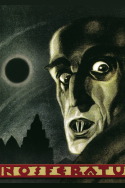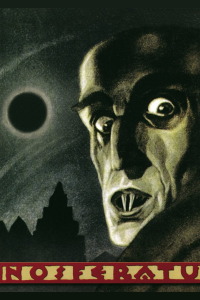
Review of Nosferatu (1922) by Gonzalo R — 14 Aug 2010
It was "captured" on location (on real boats even) and uses real props (like real rats!) and the rough, aged cinematography has a raw, ancient found footage feel to it. Films like "Paranormal Activity" have attempted to craft this "accidentally seen on film" appearance but don't understand the nature of: they try to shock us by throwing images at us instead of allowing scenes to unravel and creep us out that way. ("The Blair Witch Project" was closer to this idea.) All this adds up to an authentic experience that is so true and truer and truer that is utterly chilling.
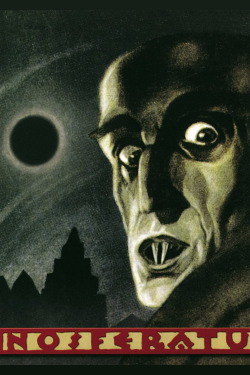
This film also employs many sleights of hand that contemporary directors don't seem to have in their imagination: inverted black and white, sped up editing, characters fading out, eerily long-cast shadows and dark lighting. The greatest special effect though is Max Schreck's performance seems, indeed, as if he really is a vampire and not just acting (as the movie "Shadow of the Vampire" had fun telling the legend of). This original monster movie cut the way not only for the vampire genre but all subsequent monster movies such as "Phantom of the Opera," "King Kong," "Jaws," and so on. This is not your young niece's romantic vampire though; what subsequent vampire movies have mostly forgotten is that this film showed what a true vampire is: based on the ruthless villain of Bram Stoker's novel, it is a vile creature to the bone.
And so I think quite highly of this movie yet there is much about Herzog's remake that I admire more: though these sorts of movies are not about screenplay so much as atmosphere I felt his screenplay's structure is a stronger design in terms of its meditative journey, and it has some considerably intriguing twists towards the end whereas this movie is a rather typical good defeats evil conclusion. Herzog, bless his heart, also considered "Nosferatu" beyond his reputation as a killer, the one that I even reinforced up here. Working with favorite muse Klaus Kinski (the only actor who could rise to the challenge of stepping into Schreck's shoes), they made Nosferatu into a wretched, cursed being who we could nearly pity.
The sharpest difference though, for me, is that Murnau, as a silent filmmaker (so from an era full of potential that I'm not sure we got to fully see the apex of except in the contemporary films of Guy Maddin), tries to prey upon us, primarily, psychologically. Yes, the film has a forceful physicality to it but Herzog has a way of digging deeper into surroundings, really searching through them and finding various details that make the journey more memorable. The original "Nosferatu" is more of a nightmare you eventually awake from and put behind you.
Many find it the more powerful of the two though. Herzog (who, it must be said, later made a "Bad Lieutenant" remake that transcended the original, as well as a film called "Rescue Dawn" that was an improvement upon his own documentary), he calls "Nosferatu" one of the greatest films of all time, perhaps the greatest. We can see how it would be a major inspiration for him... On this point though I must note: David Lynch's "Eraserhead" greatly inspired Stanley Kubrick as he worked on "The Shining"... "The Shining" is a deeper and more challenging film than "Eraserhead" and so, when I see this "Nosferatu," I suppose I see, in embyro, Herzog's "Nosferatu" -- and countless other terrific, genre-expanding monster films such as "The Descent.".
This review of Nosferatu (1922) was written by Gonzalo R on 14 Aug 2010.
Nosferatu has generally received very positive reviews.
Was this review helpful?