Review of Nixon (1995) by Alex M — 06 Jul 2004
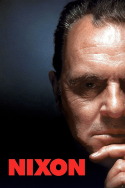
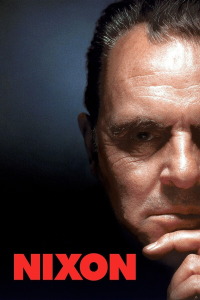
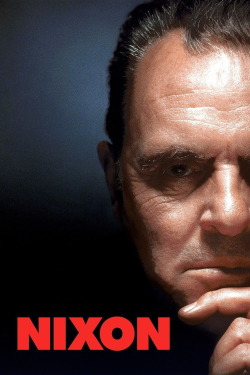
[SIZE=3]It would not be a stretch to suggest that Richard M. Nixon may be the most hated American political figure of the 20th century. The public perception of Nixon is that he was a close-minded, paranoid war-monger who was willing to lie and cheat his way to a second term in office (by authorizing the Watergate break-in and cover-up). It is entirely possible that this perception was correct, but there were no doubt other facets to Nixon's personality...no human being is either entirely good or entirely evil. The reason Oliver Stone's [I]Nixon[/I] works so well is that it rarely seems to be either defending or attacking Nixon: we are given an epic portrait of a complex man, and allowed to decide for ourselves what made him act the way he did. Stone is notorious for being a left-wing, anti-establishment filmmaker, and so many were expecting [I]Nixon[/I] to be a merciless attack on one of the most right-wing figures of the 20th century. Yet Stone is too good a filmmaker to resort to such simplicity, which is why he chose to make [I]Nixon[/I] a deeply-nuanced character study rather than a movie with an overt political agenda. This is a film that deserves comparison with [I]Citizen Kane[/I], not only because it is so stylistically assured and compelling, but also because it succeeds in portraying a flawed public figure who had greatness within his reach. [I]Nixon[/I] is about more than just one man's personality and life...like [I]JFK[/I], it is a film that conducts a cinematic investigation of how history is perceived by the public. The scope of the film is so large that the movie is able to convey the turbulence of the late 1960s and early 1970s at the same time as it is showing how Nixon dealt with that turbulence. [I]Nixon[/I] moves backwards and forwards through time in its effort to give us a sense of Nixon's entire life: as we would expect, we see all of the important events in his political career (the "Checkers" speech, the presidential race against Kennedy, the visit to China, the Watergate scandal), but we also see moments from Nixon's childhood and teenage years. As an adult, Nixon is played by Anthony Hopkins, and although Hopkins bears little physical resemblance to Nixon, he embodies the role to such a degree that we soon feel as if we are watching Nixon. The same is true of the entire cast, who perform brilliantly: Joan Allen is independent-minded yet supportive as Pat Nixon; Paul Sorvino is an uncanny Henry Kissinger; James Woods and J.T. Walsh are intelligent and slimy as Haldeman and Erlichman; and David Hyde Pierce (from TV's [I]Frasier[/I]) has a key role as John Dean, the man who would eventually blow the whistle on the Watergate scandal. Stone chooses to spend the majority of [I]Nixon[/I] focusing on the Watergate affair, perhaps because he senses that it cuts to the heart of who Nixon was. The movie seems to be suggesting that Nixon was not a Machiavellian figure who would do anything for power, but rather a suspicious and private man who felt that everyone was against him. There are times when the film threatens to become an outright apologia for Nixon, but for the most part, Stone keeps a balanced approach and does not make Nixon either a saint or a demon. By the end of this long and masterful film, we are left to re-examine our own feelings toward Nixon, and what we discover is a tragic figure worthy of Shakespeare. Nixon could have been one of the greatest presidents in American history, if only he had not been undone by his own nature.
(BASIC)[/SIZE].
This review of Nixon (1995) was written by Alex M on 06 Jul 2004.
Nixon has generally received positive reviews.
Was this review helpful?