Review of Night on Earth (1991) by Atsuko B — 09 Nov 2007
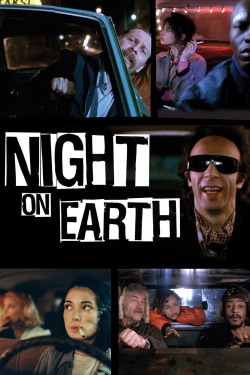
From allmovie: Armin Müller-Stahl as an East-German refugee and former clown, who is awe-struck and belittled by the bustling NYC around him makes up for a lot. His helplessness when trying to communicate with his passenger, played by Giancarlo Esposito, almost becomes tangible when it manifests in his complete inability to steer the taxi. Within very few minutes the two men develop an utterly deep and good-humored trust and friendship between them. I'd call it the funniest portion of the movie, but in Rome we encounter Roberto Benigni as an always talking, sex-obsessed cabbie. His is the story we get the least emotional or intellectual outcome from, but, hey, welcome to the Benigni Show! If you are open-minded enough to laugh about a few surprises in the field of sexual experimentation (which we don't see but only hear described without too much detail), this one will stay with you as one of the brightest twenty minutes in your life. Before Rome we visit Paris with the most mysterious, yet most catching segment, a curious story about the afore-mentioned blind woman and a black cab driver, who - we can't be sure - might be going blind himself (he's very short-sighted and therefore has problems with driving his taxi) and has a lot of questions to ask. The woman, however, is not interested in conversation, yet we get the impression she opens up more than the driver realizes. In Helsinki a group of drunks tell the story of their sleeping friend's worst day. The cab-driver listens to it. It's a terrible story about a horrible predicament and the poor fellow's life basically lies in ruins. And yet the cabbie tops the story with one of the saddest things you'll ever have heard.
The concept of the movie thinks of night as a place rather than a time, because all of the stories begin at the same moment in time but in different time zones. We move east in the process of the film and so we experience sunset in Los Angeles and early morning in Helsinki. Each of these times lends a special atmosphere to the story it tells, which becomes the most effective in the Helsinki story, which is utterly sad, however ends with a new day starting. People leave their places and go about their lives - the world moves on, none of the stories has an ending, life for each of the characters (except one) will continue.
What's so great about this movie is that it tells such different stories with such different characters who all have different pasts and intentions, each accommodating the place of action (even visually - in L.A. even the buildings appear to be candy-flavored, while in Helsinki the city is cold, drab, yet hopeful) and it all comes together to this huge picture, which reminds us that we are all different but all live on the same planet and know similar things about life, death and everything in-between. I wonder what this movie would have been like, if Jarmusch had also considered taxis in non-western countries.
This review of Night on Earth (1991) was written by Atsuko B on 09 Nov 2007.
Night on Earth has generally received very positive reviews.
Was this review helpful?