Review of Nanook of the North (1922) by Eduardo P — 10 Oct 2007
An essay on Documentary Film and Nanook of the North-.
The idea of making documentary films was born from a need of documenting the reality; the process in which we turn â??unknownsâ?? to â??known factsâ?? and thus to satisfy our curiosity, to provide us with a visual history and to pass on information to upcoming generations. The idea seems noble, however the question should be, to what extent a documentary film is and can represent the truth? Or in other words, to what extent does it distort the reality?
To start, I believe it is fairly possible to make a documentary film free of bias, distortion and twisting the truth, but I also believe the success depends on the subjectâ??s nature. Think for example the documentation of a scientific experiment; letâ??s say of a brain surgery. Unless the surgeon gets excited by the camera and ruins the operation, thereâ??s no way that the documentary will be subject to bias. Whatâ??s happening on the film is in fact happening as it is. Obviously you donâ??t expect such a film to be screened in movie theaters (surely wouldnâ??t be a blockbuster) but it could be studied by brain surgeons all over the world. On the other hand, keeping the same subjectivity in the footage is not nearly as easy or possible when it involves â??otherâ?? peopleâ??s lifestyles or issues subject to debate.
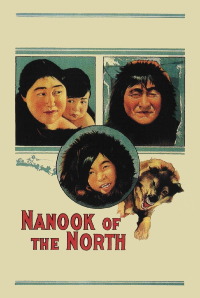
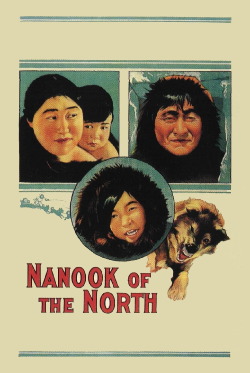
In the case of â??ethnographic filmsâ?? as Karl Heider defines, even if thereâ??s no pre-prepared script, set stages or actors pretending some role they are not, the presence of a camera in the scene will be a major distortion to the natural behaviour of the people unless you film them in secret which would be ethically unacceptable. They might be on their best, might be aggressive or nervous in front of a camera. In the famous documentary Nanook of the North by Robert Flaherty, this problem surfaces itself. Definitely it is a nice â??scriptedâ?? film but honestly I would not have understood it was scripted if I didnâ??t read anything about the film and the actual people living there (At least if I forget all about the scene where Nanook was biting the record which was very Hollywood). In fact, what is more important than us, who watch the film almost a century later is the people who watched it at the time. Thereâ??s no way they could tell what they saw was a pure fiction and the â??Eskimosâ?? which actually call themselves â??Inuitâ?? are precisely not â??ancient prototypes of usâ?? and in fact had â??radios that they used to follow fur prices in San Fransisco and Londonâ?? at the time the film was shot, in fact fur trade is how Flaherty know these people, as Jill Godmilow notes in the essay Kill the Documentary as We Know It. I really quite canâ??t tell if Nanook of the North was made by Flahertyâ??s admiration of a naive lifestyle (which I believe is more likely) or to emphasize an ideology of a â??developed westernâ?? superiority. Though two things are certain; firstly what we see is (at least to some extent) fiction rather than a depiction of the reality and secondly since people got it as real there are also ethical problems that can be discussed individually.
Although it is not the case in Nanook of the North, I do not say that fiction or a scripted documentary can not tell the truth; indeed it can elegantly, and there are very nice examples but overall, as a person prone to believe many things in sci-fi and horror movies that aliens, ghosts, vampires, zombies and like do really exist, I resist believing in the documentary films more mostly due to reasons discussed above. Burak N. Kurt.
This review of Nanook of the North (1922) was written by Eduardo P on 10 Oct 2007.
Nanook of the North has generally received very positive reviews.
Was this review helpful?