Review of Nanking (2007) by Edith N — 17 May 2012
Putting Woody Harrelson in Glasses Doesn't Make Him Respectable.
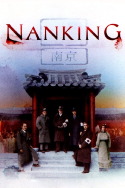
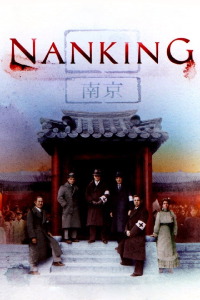
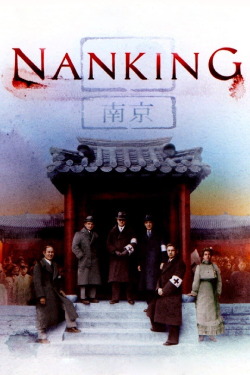
This is a horribly depressing documentary, of course. No one would see its title and not think that unless they didn't know anything about the Rape of Nanking. Which, of course, means that there is an unfortunately large number of people who won't know what they're getting into just from the name. However, there is one moment which is very briefly delightful, though it is unfortunately followed up by something along the lines of, "And then the Japanese killed my mother." Because that's pretty much how stories about the Rape of Nanking go. However, the one moment which is pleasing to an audience, though it's probably unconscious on the part of the man being interviewed (more on which anon), is that he is still making sound effects for the planes and guns even all these years later. It's a remarkably human moment in a story which goes almost beyond human understanding.
Ideally, I should not have to go into the details of the Rape of Nanking here. Suffice it to say, then, that this documentary is a combination of historical footage, interviewers with survivors, and readings by current actors standing in for important figures of the events in question. Jürgen Prochnow, for example, stands in for John Rabe, whom we have seen before. Woody Harrelson is Dr. Bob Wilson, the Steve Buscemi character from [i]John Rabe[/i]. Mariel Hemingway is Minnie Vautrin. And so forth. And while they are not acting per se, they are very clearly intended to be portraying the figures whose words they are reading. For the most part, the camera shows us the faces, only occasionally delving into the imagery that Rabe and the others managed to document the horrors with. The timeline is laid out, illuminated by the details of rapes and murders. Some of the survivors weep as they tell of the things which specifically happened to them.
But I can't tell you those survivors' names. I do believe that it's impossible to tell the true and full story of the Rape of Nanking without using the experiences of those Westerners who saved so many lives, so I'm certainly not suggesting that they have no place in these events. They also serve to counter, at least a little, the idea that the Rape of Nanking was exaggerated if not outright invented by the Chinese government. However, neither of my usual two sites for checking details of a movie provide the names of the handful of actual Chinese people interviewed here. You can tell they're not actors, because they are old people telling stories about what happened to them when they were in children. One woman talks of being raped at twelve because she thought it would save her grandfather's life. One man talks of the death of his mother and how his baby brother was unable to understand what was going on. These are important stories, just as important as those of the Westerners. But I don't remember their names, and no one wants to help me.
It is frustrating to me that people call this documentary "anti-Japanese." As if the problem with the deaths was just that the killers were Japanese. Oh, we know it won't be airing in Japan any time soon, because Japan has never come to terms with its own history from that era. Producer Ted Leonsis insists that the film is merely anti-war, and I think that's accurate. No, it doesn't talk about the millions killed by things like the Great Leap Forward, but then, it also doesn't talk about the Korean "comfort women." Neither are relevant to the story being told, which is one city at one time. I'm quite sure that most of the people involved could say pretty scathing things about the mistakes made under Mao, as could I. That, however, simply isn't the point. Nor is any history between China and Japan up until that point or anything which has happened since. The point is to remember what happened in Nanking, to recognize part of our human history.
To me, the importance of Nanking is quite simply that it shows both the good and the evil of which humans are capable. John Rabe used the power of Nazi Germany to protect hundreds of thousands of innocent civilians. Oh, he was one of the only Germans I can excuse for not knowing what was going on in Germany at the time, being that he hadn't been to Germany in quite some time, and he was ignorant enough so that he thought Germany would step in and protect the people of Nanking. Minnie Vautrin committed suicide in despair for all the women she was unable to protect. However, she protected more women than she would have been expected to. The atrocities of Nanking--of World War II in general--are a portrayal of humanity at its worst. The stories of the Westerners of Nanking--and, yes Oskar Schindler and Raoul Wallenberg and many others--are a portrayal of humanity at its best. You need the former to truly display the latter, though I'd do without the latter if we could avoid the former while we're at it.
This review of Nanking (2007) was written by Edith N on 17 May 2012.
Nanking has generally received very positive reviews.
Was this review helpful?