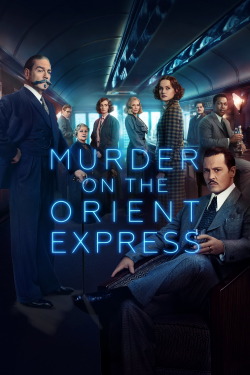
Review of Murder on the Orient Express (2017) by Paul M — 19 Dec 2017
I saw the original "Murder on the Orient Express" (1974) many years ago and remembered it as enjoyable pulp with a particularly sparkling performance from Albert Finney as Agatha Christie's detective Hercule Poirot.
The film didn't hold up as well for me when I saw it again recently in anticipation of Kenneth Branagh's new take on the familiar story. But the original "Murder" still has its pleasures, particularly Finney's fussy genius and the parade of now mostly dead stars who are all suspects in the title crime.
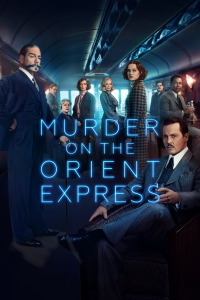
Branagh's "Murder on the Orient Express" is more visually arresting than the original and his portrayal of Poirot (he cast himself in the lead role) makes the "little man" described by his creator more likable - and his mustache more extravagant.
The plot is mostly unchanged from the original book and film, but Branagh the director seems less interested in unravelling the clues than in finding new ways to film inside a train (and several excuses to get outside of it).
No sooner has the cold body of Samuel Ratchett (Johnny Depp is stiff as the future stiff) shown up with 12 stab wounds than Poirot has somehow figured out that he was really someone else, a man responsible for the notorious kidnapping and murder of a young American child.
(A riff on the Lindbergh kidnapping case.) If the new film ever explains how Poirot made the connection, I missed it. But that seems typical of Branagh's "Murder," which doesn't dramatize very well how Poirot's "little grey cells" put the pieces together.
Of the star-studded cast, only Michelle Pfeiffer is an improvement over her predecessor in the original (in this case Lauren Bacall). That's partly because Pfeiffer is still a wonder (missing from movies for too many years) but also because screenwriter Michael Green has made her character the mastermind of the murder ready to take all the blame for the crime.
The other co-stars all look lovely and act appropriately but barely register. The new "Murder" does do a better job than the original film in providing motivation for Poirot's uncharacteristic decision to let the crime go unpunished, on the theory that the victim, who only a few scenes before his demise shared a dessert with Poirot, got his just deserts.
I wasn't upset that I boarded this "Orient Express," but I won't necessarily be racing to the box office if the promised "Death on the Nile" sequel actually becomes a reality.
This review of Murder on the Orient Express (2017) was written by Paul M on 19 Dec 2017.
Murder on the Orient Express has generally received mixed reviews.
Was this review helpful?