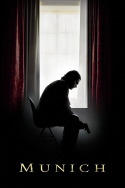
Review of Munich (2005) by Trevor B — 29 Apr 2010
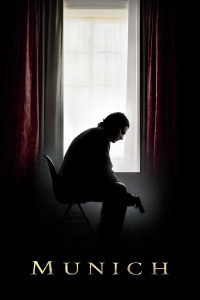
A gripping and tense spy thriller that not only keeps viewers on edge of their seats but poses plenty of tough questions and doesn't cop-out by offering easy answers. Despite mostly strong reviews and several Oscar nominations (but no wins unfortunately), this film flew under people's radars for the most part back when it was released towards the end of 2005 but in my mind, this was one of the best films of that year.
It also ranks alongside Schindler's List and Saving Private Ryan as one of Spielberg's personal best efforts. The film's title might be a little misleading as the events that transpired at the1972 Olympic games are only shown briefly (although the film revisits these occurences from time to time via a combination of actual news footage and cinematic reenactments).
The real meat-and-potatoes of the story deals more with the aftermath of the incident and the actions that were taken to deal with those who were responisble for the Black September massacre. This is inherently compelling material and Spielberg gives it the justice it deserves; the numerous set pieces throughout the film are executed to flawless perfection with enough gritty action and white-knuckle tension to keep the juices flowing for the entire running length but this film has far more on its mind above and beyond just giving viewers an adrenaline rush.
At the core of this film is the question of where the line between terrorism and counter-terrorism exists and Spielberg doesn't pay lip service to this issue. Even Avner, the leader of the group of operatives sent on this mission (who is played with note-perfect intensity by the underrated Eric Bana) admits that killing becomes easier and easier with each target he must go after, several of whom aren't even on the list of names he was given.
Another equally important question is also posed: Can the war on terror truly be won? History has shown time and time again that even if we suceed in getting rid of one terrorist or a group of terrorists, there is usually something or someone worse waiting in the wings to take that entity's place.
One point that Munich drives home effectively is that oftentimes, it's not as easy as a simple matter of good and evil or black and white. This moral quagmire is what elevates the film to a higher level and keeps us riveted.
Thankfully, Munich doesn't resort to sermonizing or preaching and it doesn't lose sight of the characters at the epicenter of this storm. If we didn't identify with Avner and his team of operatives, this film wouldn't have nearly as much resonance as it does.
We grow attached to this group of characters and get to know them as individuals. Spielberg also uses this opportunity to incorporate some low-key humor to diffuse some of the tension ans keep things from becoming to serious and gloomy.
At nearly three hours, this is definitely a long film but Munich justifies every second of its running time and the ending provides an effective link between our modern-day circumstance and those of the early 1970's, during which the events of this film transpired.
This review of Munich (2005) was written by Trevor B on 29 Apr 2010.
Munich has generally received very positive reviews.
Was this review helpful?