Review of Mumbai Meri Jaan (2008) by Chetan H — 23 Aug 2008
We finally have a winner, folks. After 8 months into a decidedly lacklustre year for Bollywood (Aamir being the only really good movie in a year populated by the Races, Sinngh is Kinngs and Bachna Ae Haseenos), we have Mumbai Meri Jaan, the first GREAT film of 2008. Directed by the immensely talented Nishikant Kamat, the man who made the superlative Marathi feature Dombivili Fast, this is a beautifully made, kaleidoscopic portrait of aamchi Mumbai limping back to normalcy after the 7/11 serial bomb blasts two years ago.
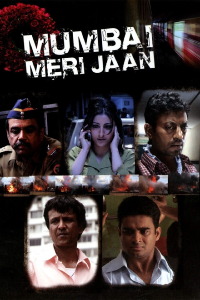
Nishikant Kamat deserves a big pat on his back for scripting and directing this feature with a lot of heart and a lot of vigour. India's answer to the Oscar-winning Crash, this one features a multithreaded storyline consisting of common Mumbai citizens - from Kay Kay Menon's Suresh, an out-of-work computer salesman who is mistrustful of the Muslim community to R. Madhavan's Nikhil Aggarwal, an idealistic corporate yuppie, who shuns "the better life" abroad to stay in his own country and improve it. On the other hand we have Roopali Joshi (Soha Ali Khan), a maverick journalist for a leading TV news channel, for whom the tragedy becomes personal when she finds out her fiance also died in the blasts, and who, once perpetrator, finds herself an exploited victim of the merciless fourth estate.
Paresh Rawal, in one of his greatest performances, on par with himself in Ketan Mehtal's Sardar, plays Tukaram Patil, an aging cop due for retirement, prone to spouting out philosophy and humour in the same breath. Under his wing is rookie cop Sunil Kadam (Vijay Maurya), seething with self-righteous, idealistic rage at corruption and apathy, and also because his honeymoon got cancelled thanks to the bomb blasts. And last, we have Irrfan Khan as a Madrasi coffee vendor struggling to make ends meet and to attain status and respect in a city where money talks. He learns about how fear and panic can be generated instantly - and all it costs is a rupee.
The writing is fabulous. It is a very, very rare Hindi film that does not sound scripted. Listening to the characters in this movie talk is like listening to conversations taking place in the local train, or in the table next to you at a restaurant. The characterization is precise; each character looks like and sounds like the character he or she is, and nobody lives in outlandish bungalows or drives fancy cars (Indeed, Madhavan's Nikhil spends much of his time convincing everyone why he prefers commuting by train instead of buying a car, which he can obviously afford.) The dialogue is crisp, infused with sarcastic, deadpan humour and is really worth listening to. Each line of it. How long has it been since we've had a movie like that?
Mercifully, aside from the Kay Kay Menon track - and it's done in a subtle manner there too - Kamat avoids playing around too much with the done-to-death Hindu-Muslim rivalry and communal and political overtones. What is shown instead, is a more realistic slice-of-life where the day after the blasts, all Mumbaikars were worried about was how to travel in the train and beating the early morning rush. We see Suresh struggling to resolve fundamental conflicts - he needs money but refuses to take a lucrative order for a company owned by a Muslim. Roopali, a ruthless journo, is exploited by her own news channel for a story dealing with her personal loss. It is a sharp critique of the media and their wanton abandonment of ethics as they cash in on the tragedy - remember the Aarushi case recently? - and Kamat handles it well. If it seems like a caricature, one must remember that T.V. news channels are just that nowadays.
Mumbai Meri Jaan also boasts of excellent cinematography, and a very good background score by Sameer Phaterpekaris which is extremely apt, despite being a trifle over-orchestrated. The editing is laser-sharp, cutting back and forth between the several storylines in a manner that is coherent and yet paces the film well. But the real star is the direction. Nishikant Kamat proves his mettle as one of the brightest new talents out there. Meticulous attention to detail and some brilliant shots (I loved the one where Vijay Maurya goes out of the police station and stands in the rain; very Janusz Kaminiski-like) make this one of the most brilliantly directed films in ages. It has National Award written all over it.
If I must nitpick, I could grumble about the shockingly shoddy special effects depicting the train blast. But I won't, for two reasons. One, because it's a well known fact that movies like MMJ are made on budgets which are roughly a third of, say, two songs from any given Yash Raj film. Secondly, it was about 30 seconds long and I didn't feel that the impact had been diluted at all.
And finally, what can one say about a cast that already looks so great on paper? This is the ensemble performance of the year with everyone giving at least career-best performances. Kay Kay, Madhavan and Soha Ali Khan are brilliant, Vijay Maurya is stunning, and Paresh Rawal reaffirms his status as one of the greatest actors in this country. But the scene-stealer is none other than Irrfan Khan. In a role where he doesn't have too much screen time, very little dialogue (much of it in Tamil), Irrfan is heart-breakingly good, conveying everything through his eyes. Is there a more versatile character actor than him today? Doubtful.
I conclude with two words. Tax-Free. NOW.
This review of Mumbai Meri Jaan (2008) was written by Chetan H on 23 Aug 2008.
Mumbai Meri Jaan has generally received very positive reviews.
Was this review helpful?