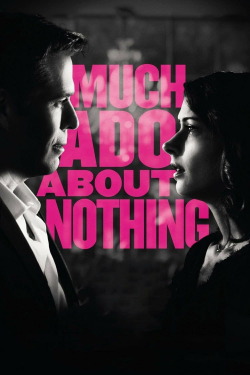
Review of Much Ado About Nothing (2013) by Mike T — 20 Sep 2012
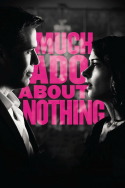
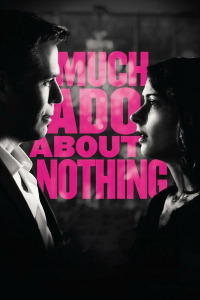
Joss Whedon has had an extraordinary year. It's not been entirely by design; through telescoping scales of production time he has served up a hearty three-course meal at the cinema in 2012, each course a fresher, more complete delight than the last. The Cabin in the Woods (directed by Drew Goddard, produced and co-written by Whedon) was the crisp appetizer, and if it was a warmed-over 2009 recipe, we scarcely noticed; it tantalized and satisfied with its whip-smart devotion to omniholyfuck horror gods too numerous to count. The Avengers (written and directed by Whedon), now the third-highest-grossing film of all time, was the big, savoury main course, paying off the half-decade Marvel Studios investment in building a new kind of franchise movie, and defining a new level of achievement for the comic book movie genre. Now, with Much Ado About Nothing - written and directed again by Whedon, and shot, improbably (and legendarily, and amazingly), on Whedon's immediately-post-Avengers vacation, in and around his California home, with a few of his friends - and I am hard-pressed to think of a fizzier, sweeter, more perfect desert.
I am called upon to wonder, of course, where Joss Whedon gets all his energy. It says a lot about the man that his reaction to the gargantuan complexity of an Avengers production was not to run off to the beaches of Nice or vanish into an opium den for a couple of months, but rather to run a thrilling, palate-cleansing victory lap around his cinematic toolkit by having the gang over to his house to make another movie. And what a gang it is - a kind of Whedonverse fever dream, essaying the Bard's Much Ado About Nothing by way of the finest talent that Whedon's many productions have brought forth. Amy Acker (Fred and Illyria on Angel, Dr. Saunders and Whiskey on Dollhouse; Wendy Lin in The Cabin in the Woods) plays Beatrice; Alexis Denisof (Wesley on Buffy and Angel; Senator Perrin on Dollhouse; the Other in The Avengers) plays Benedick. Fran Kranz (Topher on Dollhouse; Marty in The Cabin in the Woods) plays Claudio; Reed Diamond (Mr. Dominik on Dollhouse) plays Don Pedro; Clark Gregg (Agent Coulson in The Avengers) plays Leonato. Ashley Johnson (Hayden and Wendy on Dollhouse; the waitress in The Avengers) plays Margaret; Sean Maher (Simon Tam on Firefly) plays Don John the bastard; Tom Lenk (Andrew on Buffy) plays Verges. Inevitably, Nathan Fillion (Captain Malcolm Reynolds on Firefly; Caleb on Buffy; Captain Hammer in Dr. Horrible's Sing-Along Blog) shows up and swipes the whole movie as Dogberry. Fangasm doesn't begin to describe this thing, but Whedon is not merely providing bottle service; Acker and Denisof, particularly, might be playing onscreen tag with the ghosts of Fred and Wesley, but they are both so kindly illuminating as the quarrelsome lead couple in Much Ado that one guiltily wishes to pair them together in everything else they ever do, forever. And, as hysterically played by Fillion and Lenk, a Dogberry/Verges cop show - or web series - or something - is now an absolute must.
Two significant additions to the pantheon: Whedon repatriates Spencer Treat Clark, an actor I enjoyed immensely as a child (in Gladiator and Unbreakable) but who seems to have since disappeared, and here gives a scintillating performance as up-to-no-good seducer Borachio. Whedon also locates a young lady named Jillian Morgese to play Hero against Kranz's Claudio, and Morgese is delightful in what can otherwise be a slight role. I expect to see lots more of her in future Whedon (and non-Whedon) productions.
Whedon compresses Shakespeare's text successfully, skipping nimbly over the draggy parts, and doing a convincing job of working Much Ado's largest narrative hurdles - the unpleasant violence that meets the question of Hero's virginity, and the very, very, very Shakespearean turn of having the priest fake Hero's death. In the tricky role of Don John, Sean Maher excels, bringing sense and sexuality to the menace. And if the more serious material throughout has difficulty landing at times, rest assured that the comic moments come quickly and brilliantly, brought to a head by some inspired physical comedy from both Denisof and Acker, as the erstwhile lovers are gulled into loving once again.
The result is indeed a kind of midsummer night's dream of a great party we went to with our very best friends, where a bit too much wine was had, a few too many secrets were told, and we nonetheless came out better, more complete people. Much Ado About Nothing is a worthy addition to Whedon's ever-burgeoning stable of great stories, and if the director chose to follow every major project with a 12-day Shakespeare read with a few of his closest friends, I will never be in a position to complain. This is inspiring work.
This review of Much Ado About Nothing (2013) was written by Mike T on 20 Sep 2012.
Much Ado About Nothing has generally received positive reviews.
Was this review helpful?