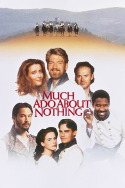
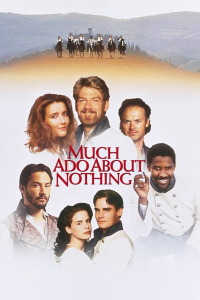
Review of Much Ado About Nothing (1993) by Celine F — 04 Aug 2008
Don't get me wrong, I think that Shakespeare is one of the greatest storytellers who's ever lived, but I'm not so sure that his material really works for the screen. Not being entirely familiar with the story, I came into "Much Ado About Nothing" fairly fresh.
However, the dialogue made it difficult at times to figure out what was actually going on. Also, I didn't care very much for some of the performances, particularly in the case of Robert Sean Leonard and Keanu Reeves.
On the other hand, I thought that Kenneth Branagh's Benedick was very effective. He seemed to know just how to communicate what his character was saying in such a way that the inherent humor really came across, which is something that I didn't get from some of the other actors.
Personally, I would have preferred an entire movie about the love/hate relationship between Benedick and Beatrice, skipping all of the plot about Hero and Claudio's "love." One thing that bothered me about the film was the insipid smiles that are on so many of the character's faces for a lot of the movie.
Particularly in the beginning, I felt like it was a joke that everyone was walking around with a silly grin on their face. In the end, while the film does have some positiive attributes, "Much Ado About Nothing" was not for me.
I'm really not sure if direct adaptations of Shakespeare's work belong on the screen. In the wrong hands, the dialogue can be impenetrable, which makes the story much less effective, if it can be understood at all.
At the same time, I'm not suggesting that the best way to go is to modernize the story, as was done in the 2000 adaptation of "Hamlet," with Ethan Hawke in the title role. So, this leaves a rather impenetrable conundrum.
If a filmmaker alters the dialogue to make it less opaque, he/she is committing the crime of taking away the essence of a Shakespeare play. But, on the other hand, if he/she tries to modernize the setting, then that will most likely seem stupid and unintentionally funny.
In the end, perhaps the best way to deal with the Bard's plays is to keep them on the stage that they were created for.
This review of Much Ado About Nothing (1993) was written by Celine F on 04 Aug 2008.
Much Ado About Nothing has generally received positive reviews.
Was this review helpful?