Review of Mr. Smith Goes to Washington (1939) by Kylie P — 22 Feb 2010
From October 12, 2008:
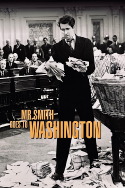
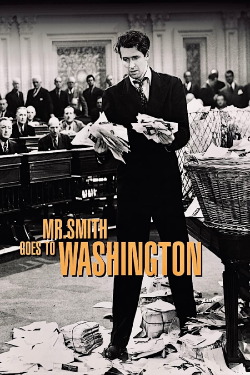
Mr. Smith Goes to Washington truly is a great American film about, of all things, America. It's inspiring, but it also has a darkness, a cynicism, that director Frank Capra delicately balances.
First of all, this is one of the most perfect bits of storytelling ever to be captured on film, so it's no wonder it won an Oscar for screenplay. Jefferson Smith is, of course, the everyman, and one might be tempted to paint his ideals as hokey, but the fact of the matter is, anyone who considers themselves a patriot starts off with that same sense of wide-eyed idealism. Though the film paints the portrait of some of the most corrupt and vile abusers of the American political system, which apparently upset a lot of political folks at the time it was made, the kinds of porkbarrel spending and behind-closed-doors wheels and deals still exist. The screenwriter simply took realities and presented a story where one man's idealism clashes significantly with those realities, and he must struggle to hang on to that idealism and make that his reality in the face of impossible odds. The story is complex, multi-layered, and mesmerizingly considerate of how government works. The characters are perfectly flushed out, and the story's center is never at question.
The story in Mr. Smith... also evokes every emotion. There is brilliant comedy from Jean Arthur and Thomas Mitchell, who plays Diz, a roving reporter friend of Saunders'. There is tear-causing drama when Jefferson undertakes a filibuster, of all things, as his weapon to fight back (if only filibusters were actually used today). There is anger and indignation when the Taylor machine starts hurting the young boys eager to come to Jeff's aid and spread his word through their start-up newspaper. None of it feels manipulative, either, because each time the heroes try to gain in the battle against the machine, the machine knocks them back. The ending scene is, therefore, believable, even if predictable (though the execution of it is not at all predictable).
This was also Jimmy Stewarts's star-making performance and one that got him a bit typecast. He is also the very first example of someone who critics and the masses alike felt was largely robbed for the Oscar for which he was nominated, culminating in an apology Oscar for The Philadelphia Story one year later (for lead actor when he was kind of more of a supporting one). This performance was stunning. There was something natural and charismatic about Mr. Stewart that almost always made him believable, but those qualities seemed to shine in Mr. Smith. The climactic scenes in the Senate, during the filibuster, are the evidence of how great this performance was.
Yet, the whole ensembe was simply great too. From Claude Rains' stoic but smirking Mr. Paine to Jean Arthur's hilariously sarcastic Saunders (what a great part for a woman in that day and time!), to the whole cast of characters, it was just a magical assembly of actors during the Golden Year in Hollywood.
The filmmaking aspects are also superb. Capra was really wonderful at using lighting to enhance mood or tone and punctuate the scene in question. One scene where this was apparent was the scene in which Saunders, semi-intoxicated, tearfully tells Jeff she's quitting and marrying Diz, and then runs out into a barely lit office hallway. The shadows are long, one side of her face is algow, and then she breaks into tears and turns away as Diz, resigned, tries to comfort her. The pacing is consistent, and the whole vision was directed with grace and balance.
The whole Senate floor and all of the locations were a painstakingly recreated studio set! That's some fantastic art direction! The replicas are impressive. This film was up against Gone with the Wind for some of these Oscars, though, because 1939 was just that good (hence its nickname).
The only thing that detracts from the film is the abrupt ending. The climactic final scene plays out, but there is no real denouement to allow that scene to settle in that way that leaves you feeling satisfied, like after eating a good meal. Instead, it almost feels like one ate too quickly, just to get the meal over and done with. That's a small concern, not even a complaint really, but it's one of the things that makes the viewing experience of Mr. Smith to be slightly less-than-perfect.
This review of Mr. Smith Goes to Washington (1939) was written by Kylie P on 22 Feb 2010.
Mr. Smith Goes to Washington has generally received very positive reviews.
Was this review helpful?