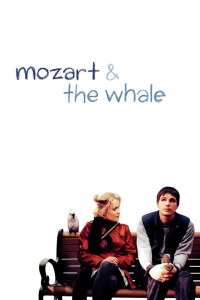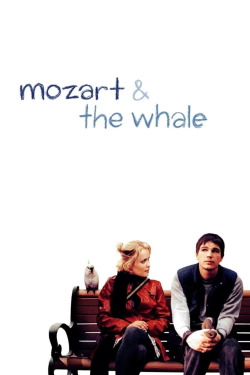
Review of Mozart and the Whale (2005) by Anyazelie Z — 26 Jan 2009
There has been considerable concern by previous reviewers as to the authenticity of the characters: how are autistics supposed to act, anyway? Going into this film, I was extremely skeptical. How could 'neurotypicals' (the cognitively normal) act like Aspies, when I have not in an entire lifetime mastered the reverse?
Nonetheless, this film deeply impressed me. The contrast between the protagonists and the secondary characters reveals the diversity of the autistic spectrum, avoiding any kind of monolithic characterization. There is just as much diversity on the autistic spectrum as there is off of it.
For me, this movie brought back memories of my childhood obsession with cetaceans (whales, dolphins, porpoises), a subject I expounded upon in my first attempted book at the age of seven. In the dolphin I found as a child the physical manifestation of my existential self, as I did in Beethoven's Marcia alla turca in my later youth (which I of course listened to repeatedly). In many other respects, I discovered myself relating to the protagonists, and I could not figure to which I owed a greater affinity.
Radha Mitchell's character (Isabelle) depicts someone very much autistic, but often in a manner more subtle and less stereotypical than some may be used to. Asperger's is a "developmental disorder", and therefore, due to a lifetime of learning how to cope, many adults do not fit as neatly into clinical parameters. Ultimately, what makes someone autistic is in the mind. Although behavior can reflect one's cognitive self, behavior is also socially regulated, and there is therefore no certain way to determine how a given individual's mind will find expression in a social context.
It's true that the movie Rain Man has created misconceptions about autistics when only perhaps ten percent show signs of 'savantism'. However, I was not bothered by the mathematical abilities of Josh Hartnett's character (Donald). What is less important than Donald's aptitude for numbers is the way he thinks: the particular manner in which he processes the information in his environment. This is in itself quintessentially autistic, especially in regards to pattern seeking (I do this with words in a manner that parallels Donald's numerical musings). As Donald is articulate, he is able to provide an explanation of the process (absent in the Rain Man).
To any fellow autistics, I also recommend Edward Scissorhands (for its themes of isolation and conformity) and Amelie (who one person I read aptly called "spectrum-ish", and others have diagnosed with Asperger's). For anyone interested in garnering a bit of background before watching this film, I recommend researching autistic culture. Also, please avoid pathologizing difference, as one reviewer did. The term "disease" is as derogatory when referring to Asperger's as it is to gays and the deaf.
This review of Mozart and the Whale (2005) was written by Anyazelie Z on 26 Jan 2009.
Mozart and the Whale has generally received positive reviews.
Was this review helpful?