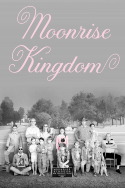
Review of Moonrise Kingdom (2012) by Shiira — 13 Aug 2012
The year was 1955. Thereupon Ngo Dinh Diem's launching of a propagandist campaign("Denounce the Communists") against the Viet Cong, his collectivist-minded opponent, the war began, in earnest.
During the intervening time, before our boys entered the fray, the South Vietnamese president killed 12,000 of these so-called commies, and for good measure, imprisoned 40,000, no doubt, innocent men, but still we supported the ROV despot.
Ten years later, our consortium with a nation that allegedly shared the same democratic principles and ideals with our forefathers continued, bombing Diem's enemy to the north in the process, as part of an operation called Flaming Dart, which knocked out North Vietnam's industrial infrastructure.
1965 was also the year that President Johnson deployed the 3rd Marine Division(the first Americans to arrive in the Southeast Asian country) to quell the uprising of North Vietnamese insurgents at Da Nang Airport.
Meanwhile, Keith Richards was dating Linda Keith, the groupie who would serve as his muse when the debauched musician penned "Ruby Tuesday", an elegiac ballad from The Rolling Stones album Between the Buttons.
The song serves as the soundtrack of forbidden love in The Royal Tennenbaums, when Richie declares himself to his adopted sister Margo, and has the razor cuts on both wrists to prove it. They lie down in Richie's tent, sharing the same sleeping bag they used as children, when the pair ran away from home and camped out in a museum.
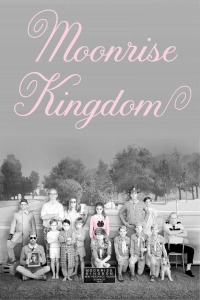
Not for nothing does the on-screen narrator establish the year in Moonrise Kingdom, since this period piece film is a humanist riff on the French New Wave classic Pierrot le fou, Godard's polemic against the Vietnam War.
The exposition is stealthily laid out in The Young Person's Guide to the Orchestra, the Benjamin Britten album that Suzy's brother plays on his phonograph, which indirectly explains how the film could be interpreted as Francois Truffaut's take on the 1965 film, when the scratchy female voice deconstructs art, explaining how an artist can play variations of the same theme.
Similar to the self-aware French gangsters, Sam and Suzy are lovers on the lam, who end up occupying a coastline. Although the children lack their adult counterparts' pessimistic worldview, Moonrise Kingdom has more than Small Change on its mind.
Its romanticism is barbed. This seemingly comic film is also politically-charged, sharing with Pierrot le fou, the same anti-Vietnam sentiment, best-exemplified in Sam's resignation from the Khaki Scouts, a thinly-veiled reference to our armed forces, which makes the small boy a conscientious objector.
Scout Master Ward runs Camp Ivanhoe with the bombast of a four-star general, treating the boys as subordinates with a regimented severity that is uncannily military-like. When the scout master emerges from his sleeping quarters, it's with ceremony, demanding reports from the Khakis about their respective projects and threatening them with demeritorious citations like a cartoon version of Patton, as he advances incrementally towards the dining area, where the tight ship he commandeers is suddenly undermined by Sam's disappearance.
Alone in the tent, Ward dictates his memoirs into a tape recorder, as one would during wartime. (Later, he saves a superior officer's life, which is pure war movie hokum.) When the search party discovers the children's encampment on the beach, and the children themselves, caught, perhaps, under post-coital conditions, reverberations of The Royal Tennenbaums can be felt.
This time, the forbidden love, of course, isn't attributed to any quasi-blood relation, but rather, their prepubescence. A manifesto, however, is embedded in the children's actions that transcends the illicitness of their love.
Juxtaposed against the representative military base, Fort Lebanon, whose Vietnam iconography can be glimpsed in the background as Cousin Ben walks the underage couple to the chapel, the children's affinity for each other seems like a revolutionary act.
It's more than a case of puppy love, more than your typical boy meets girl narrative. Their romance is symbolic, of the anarchic sort, both personal and political, bringing to mind the late-sixties catchphrase: "Make love, not war," due to their preternatural maturity, and what such a relationship entails contextually.
Sam is a lover, not a killer. In Pierrot le fou, Ferdinand tells the story of the man in the moon's exile from his sphere, after an American astronaut shoves a Coke bottle in the lunar being's mouth. In Melody, Alan Parker makes the same critique against capitalism when Daniel knocks over a Coca-Cola bottle during a dinner party thrown by his bourgeoisie parents.
Not working in the Truffaut spirit, Parker has his students attacking the teachers, in order for Daniel and Melody, the newlyweds, to get away by trolley car. Sam and Suzy are romantics, but they won't be bricks in a wall.
This review of Moonrise Kingdom (2012) was written by Shiira on 13 Aug 2012.
Moonrise Kingdom has generally received very positive reviews.
Was this review helpful?