Review of Moneyball (2011) by Charles G — 02 Mar 2015
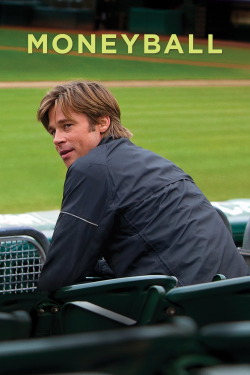
Quite an achievement. It could be called one of the best Sports movies ever made, although that would be something of a misnomer, as it is barely about sports. Its not anywhere as funny as the book (Michael Lewis is a fantastic writer), and it does not get in deep into the statistical stuff, but that is largely to its credit. Lewis fawned over Beane's now antiquated stats and a 2002 draft which looked revolutionary but turned out badly. The movie also compressed multiple real people into one fictional amalgamation, form what I've read this was because some didn't want to be depicted on screen. That this movie works at all is impressive, but that it works even better because of all these things is remarkable. The element from the book that is focused on most is the psychological history of Billy Beane, and how that history prompts his new approach to building a team on the cheap. The emphasis on the human drama, the need to fix trajectories in life which have veered off course is explored with real warmth and heft, made more so by the sad fact that Beane cannot control this either, no matter how much he wants to. Baseball is just as prone to frustrating, seemingly absurd sudden turns as anything else in life. This is especially true of the playoffs, a capricious, tiny slice of baseball which is too small a sample for any math to predict, and which is believed absolutely to define the legacy of any player, manager and GM. To this day, The A's under Billy Beane haven't found any success in the post-season.
I'm not a fan of the kind of movies Brad Pitt normally makes, so I'd seen little of him, but he has matured into a hell of an actor. The true surprise is Jonah Hill. I didn't think I would ever like him in a movie after his unpleasant, even loathsome, turns in Superbad and Knocked Up. All is forgiven, all is forgotten. But this is Pitt's movie. I'm guessing the reason this one resonated as much as it did is because of what it says about being a father. Billy Beane's decision to stay in Oakland proved that none of his psychological baggage mattered to him as much as the well-being of his daughter. The decision to remain surrounded by an ongoing legacy of near-misses, was something that he could control, but it is more than that. In the scenes with his daughter, one can see a depth of pride and love untouched by his competitive drive and history of failure. The personal validation is there already in the mixtape his daughter made: "You're a loser Dad, just enjoy the show".
This review of Moneyball (2011) was written by Charles G on 02 Mar 2015.
Moneyball has generally received very positive reviews.
Was this review helpful?