Review of Moana (2016) by Reem A — 26 Apr 2017
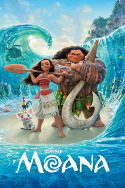
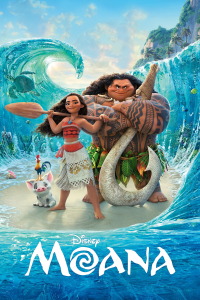
In the musical movie Moana from Walt Disney Animation Studios, a battle between one's self is portrayed as Moana struggles between her inner thoughts. This animation, while seamlessly innocent and aimed for children, accomplishes a remarkable method of teaching kids to follow after their dreams by releasing the unconscious thoughts residing in their minds.
In this movie, Maui steals a stone that is the heart of an Island goddess named Te Fiti. Although he plans to gift it to humanity, he is attacked by Te Ka, a lava monster, and ends up losing the stone to the ocean. A million years later, Moana, daughter of the chief, is given this heart by the ocean, only for her to drop it when her father, Tui, finds her standing there. Tui forbids sailing across the reef, believing that everything they need is available in their Island and that she should never go near the ocean. However, years later the Island faces low vegetation and Moana, all grown up, suggests that they cross the reef to find resources. Her father, who firmly forbids the idea, rejects it and expresses disappointment on how his daughter should follow his rules. As a response to this, her grandmother Tala shows Moana the tribe's secret-her ancestors used to be voyagers. She informs her on how her ancestors stopped sailing when Te Ka's darkness started spreading around and sea monsters appeared. She also gifts her the heart of Te Fiti, whom she picked up from when Moana dropped it in the past.
Determined to finally follow after her dreams, Moana sets sail across the reef with her pet rooster. As Moana is an amateur in sailing, she doesn't handle a typhoon properly and ends up being knocked unconscious in an island. There, she finds Maui, and convinces him to help. However, Maui only agreed to help under the condition that she aids him in retrieving back his hook. This hook is hidden in the realm of monsters, where a giant coconut crab has it treasured. They both team up to trick the giant crab and finally steal it back, to continue their sail towards Te Fiti. When they reach Te Fiti, they struggle to battle Te Ka only to realize that this is the alternative form of the goddess Te Fiti, whom appeared after the heart was stolen. Moana thus retrieves the heart to Te Ka, who transformed into a forest of flowers and colors. Moana then bids Maui farewell, who soon vanished after she started sailing back to the Island. By the end of the movie, everyone starts voyaging across the reef thanks to Moana.
There are many observational points of view about this movie. For one thing, it doesn't seem like Maui would be alive after a millennium, nor is it normal for him to disappear right after she saves Te Fiti. Moana may have had her conscious mind lost into the unconsciousness of her desires, where Maui could have been a fantasy creature created by her mind to cope with the fear of the outside world. If Maui wasn't around Moana, who has set out of the Island for the first time, she would have enormously struggled to deal with the responsibility of sailing and fighting Te Fiti. Furthermore, the giant coconut crab she fought to obtain the hook may be the same as the frog creature Ophelia fought in Pan's Labyrinth, which was a fantasy creature created by Ophelia's mind to cope with her fearful reality (just like Moana).
When Moana rescued Te Ka by giving her back the heart, Te Ka became Te Fiti, which is a symbolization of the duality of nature. They were two binary oppositions that placed a barrier against people who willed to tamper with the environment. The lava monster could have been representing the ferocity and anger people felt when their territories have been trespassed. And Te Fiti was representing how easier things would be if the rights that were stolen from others were returned, and how more peaceful life would be for everyone. When Te Fiti was restored, vegetation returned to the Island and Moana's tribe was finally able to set sail again. By the end of the movie, a frame of canoes setting across the reef is portrayed, demonstrating freedom and perhaps even migration-where people became more accepting about experiencing adventure in other places.
Furthermore, the movie teaches the audience how Moana is her own villain just as she is her own hero. This is because ever since Moana was a child, she's dreamt of sailing but always stopped herself in order to satisfy and please her family. Her family is like the big other and the superego of Freudian theory, where she struggled to set back her dreams and buried it into her inner thoughts. However, she finally learns to overcome this by fighting for the id of her desires. She teaches the audience how their identity is not by obeying your big other, but by striving to work for your dreams.
The culture provided in this movie is rather interesting, where Te Fiti is a pan-Polynesian word that translates to 'a faraway place,' and Maui is a heroic figure in Polynesia known for his good deeds for humankind. Although critics have mentioned that the movie Moana did not accurately represent this heroic figure, there has been great character development in Maui that showed the audience how heroic he is. Furthermore, Moana in the movie keeps saying "My name is Moana and I am from Motunui," which is an inspiration from the poem "I am Hine, I am Moana" by Tina Ngata.
This movie teaches children a lot about overcoming the big other and fighting for dreams. It also teaches them that just like there is a hero inside you, there is also a villain, and it is up to the choices you make that will allow which part to overcome the other. It places the audience under mobile subjectivity to sympathize with Te Ka and Moana, who struggle to find themselves as individuals. It also shows great depth of identity and freedom, and how the unconscious mind releases desires into reality.
This review of Moana (2016) was written by Reem A on 26 Apr 2017.
Moana has generally received very positive reviews.
Was this review helpful?