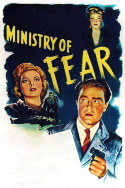
Review of Ministry of Fear (1944) by Blake P — 05 Nov 2014
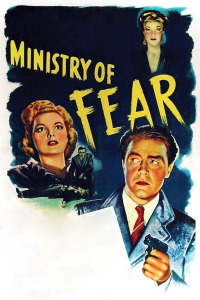
Despite its wartime premise and "Nazis-running-amok" cautions, "Ministry of Fear" is surprisingly without propaganda and crowd-pleasing silliness. It is a tight and efficient noir that works well as both a mood piece and a spy thriller. Directed by legendary filmmaker Fritz Lang, who is much better known for "The Woman in the Window" or "M", the film is a blink-and-you'll-miss-it oddity that surely will come out of the shadows after years of hiding.
When we first meet Stephen Neale (Ray Milland), he is being released from a London prison asylum. We aren't immediately told why he's there in the first place (and to tell you would ruin half of the film's gutsy paranoia), but his vulnerability makes him even more of an unlikely heroic leading character.
"I long to be among people," Stephen confesses to his doctor; his first stop is a village fête hosted by the Mothers of Free Nations charity. One of the games involves guessing the correct weight of a cake in order to win it; in a cryptic manner, a palm reader tells him a specific weight, and in return, he gets the prize.
But after a strange run-in with an armed man, it's revealed that the psychic was in fact part of a Nazi spy ring and Stephen inadvertently said a key code. Now on the run, he teams up with Carla (Marjorie Reynolds), the head of Mothers of Free Nations who is just as unaware of the ring as Stephen.
Covered with black ink and earthy grays, "Ministry of Fear" projects a sort of danger in nearly every direction it goes in. The alleyways are murkier, the nighttime streets are wetter, and buildings seem to promise menace inside. In a spectacularly shot sequence, Stephen attends a seance. Before the lights go out, we are informed that a number of deadly men are surrounding him. Lang, in a plight of expressionism, douses the entire room in a jet black, save for the glowing light that bounces off every attendees face. The scene is erupted by several gun shots and a dead man on the ground.
Throughout the film, Lang creates an abundance of these rubber band tight sequences, all of which are usually heightened by their cinematography. In a sense, Lang is like Hitchcock. He understands what the audience wants, but he's also in-touch with what he wants. "Ministry of Fear" has a lethal combination of virtuosity and popcorn suspense; not a second feels false.
The climax is someone of a letdown in comparison to the rest of the film, however: the shootout, featuring Nazi spies against Milland and Reynolds, feels quick and uneventful. Even worse, the closing shot is of the leading couple riding in a car, smiling, with the coastline in the background.
It's a dim and predictable conclusion to a film of such intelligent means, but it doesn't undermine the earlier atmosphere or the clinging paranoia the film sets so easily. "Ministry of Fear" has a dated premise, yet it somehow feels relevant and new, in the same way "All the President's Men" opened our eyes or how "Three Days of the Condor" renewed the wrong-man cliché. Lang has made better films, but this one is one of nearly effortless beauty and thrills.
This review of Ministry of Fear (1944) was written by Blake P on 05 Nov 2014.
Ministry of Fear has generally received positive reviews.
Was this review helpful?