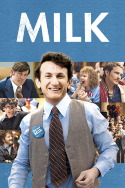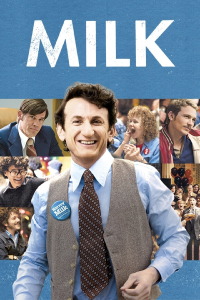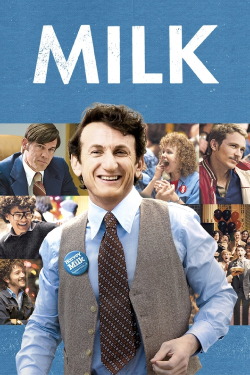
Review of Milk (2008) by Cameron J — 01 Jun 2014
I don't know who would say that sequels are never better than their predecessor after seeing this, "All the Queen's Men". Sean Penn jokes aside, it's the story of the Martin Luther King of gay rights, Martin Luther Queen! I can go on all day with these puns, but no, you have to keep the "K" in that surname, because a name featuring the letters M, L and K seems to be the secret to fighting for civil rights, and fighting for gay rights seems to be the secret to getting Gus Van Sant back into making films in a way that the general public he's aiming to preach to can actually watch. Man, I was getting just about tired of Van Sant's experimental dramas, and with "Paranoid Park", they were actually starting to get decent, although compared to this film, "Paranoid Park" is more like "Gerry". If nothing else, this film is for those Sean Penn fans who would, well, actually think that my "All the Queen's Men" joke is funny, and actually wanted to see Penn show up on screen in "Into the Wild", although it's easy to fear that you might see Penn and Emile Hirsch a little too close here. Hirsch is pretty much the only guy in this film who doesn't hook up with Penn at some point, and that's surprising, because Penn is charming enough when he's not fruity, although, in all fairness, he was married to Madonna for a while, and as many gay friends as she seems to have, that just had to rub off on Penn a little. Well, whatever got him to this point, he sure is "fabulous" in this film, which isn't too much less than that, but nonetheless less (Wait, so it's no less less?), for a couple of reasons.
I sure can appreciate a good, well-rounded biopic, but this particular formula has been done time and again, and while the subject matter is refreshing, its interpretation rather lazily falls into plotting trope after plotting trope, and not even tightly. Running just shy of 130 minutes, this film seems like it ought to be tight to cover so much layered material, and sure enough, it often is, but about as often, it drags its feet, with certain excesses in filler and material that all but thin, or at least convolute focus. Whether it reflected through a serious confusion to the using certain important supporting characters, or through certain political conflicts that Harvey Milk faces, uneven focus stands as a relatively serious issue resulting from the film's sticking too long with a certain layer, until slipping into aimlessness that isn't helped by pacing's being made all the more awkward by its own unevenness. As much as I gripe about the slow spells, about as big of an issue is rushed spells, which exacerbates the focal inconsistencies by limiting the flesh-out of layer, and wearing down on you with repetition that, before too long, proves to be detrimental to the steam of the drama. Worst of all, the rushing underexplores material, particularly when it comes to, of all things, Milk's political career, cutting through all of the potential layers to focus more on core themes regarding homosexual acceptance that, no matter how worthy, get to be abrasive, sometimes to the point of being placed over dramatic depth. Gus Van Sant, as a proud homosexual director, and Dustin Lance Black, as a proud homosexual screenwriter, take on this project with a wealth of palpable and pretty admirable ambition, and as you get used to their efforts, it's hard to deny that it pays off enough to craft an endeavor that is not simply second only to "Good Will Hunting" as Van Sant's best film, but a strong drama by its own right, and yet, to be honest, this could have gone so much further than something as effective as "Good Will Hunting", and it would have been if it wasn't too ambitious, being overblown with its themes and certain storytelling attributes, to where it has trouble focusing on the little things, like conventions and pacing issues, that subtly, but surely, hold the final product back. With that said, the film is only held shy of outstanding, being, meeting ambition with enough inspiration to compel with strong elements after strong element, even with style.
Musical style even plays a solid role in livening up entertainment value, yet the delightful '70s pop tunes are surprisingly underplayed, at least compared to one of Danny Elfman's most unique and inspired scores in years, which is balanced well enough in Elfman's classic whimsy - seemingly augmented with some James Horner-esque elements - and traditionalist enough in its subtle sweep to establish a certain uniquely grand feel for this layered and colorful drama. Visual style also subtly, but surely, and uniquely breathes life into his drama, as Harris Savides delivers on cinematography that nails a certain '70s haze and combines it with beautiful modern tastes in soft lighting that crafts an almost dreamy look for the film. While it marks Gus Van Sant's relatively triumphant return to traditional storytelling styles, this film also, as irony would have it, marks another step in Van Sant's movement to innovate style pretty attractively, with musical and visual tastes that lighten up a sense of conventionalism to this drama, but, unlike the style of the "Death Trilogy" or, to a less severe extent, "Paranoid Park", don't overshadow the value of the substance. Although its themes regarding the acceptance of homosexuality in the public eye may be controversial, perhaps even viewed as propagandist in its emphasis by some, this story concept's depth is undeniable, being a layered and extensive study on a man's transformation as a great, but flawed force in pursuit of political and social respect, and personal freedom for himself and his peers, undercut to a moderate extent, and brought to life by a script by newcomer Dustin Lance Black that, despite its conventions, inconsistencies in pacing and focus, and fair deal of subtlety issues, charms with thorough wit, and is generally tightly extensive in its characterization. Of course, more than Black, the performers really bring the characters - if you want to call these real-life figures that - to life, and that particularly goes for, say, the charismatic James Franco, Emile Hirsch and Diego Luna, the subtly intense Josh Brolin, and, of course, leading man Sean Penn, who is nothing short of utterly outstanding in his fearless portrayal of the titular Harvey Milk, defined by impeccable mannerisms and dynamite charisma, though not as much as nuance and soaring heights in emotional layering that sell Milk's transformations and fears as a man of respect seeking tremendous justice, in spite of almost equally tremendous risks. Penn carries the film with arguably one of the defining performances of his career, but really, as great as Penn very much is in this film, his performance is not the only one that drives this drama, because at the end of the day, this is Van Sant's passion project, and although such passion bloats ambition to the point of some storytelling awkwardness, Van Sant is as inspired as he ever has been in a long, long time, with a thoughtfulness that is controlled enough for entertainment value to not go lost, and for dramatic value to be unraveled organically enough for you to be immersed into many areas of depth, feeling the progression of this layered drama as its scope expands more and more, yet never at the risk of losing intimacy as a character study. The film takes way too long to ascend to its soaring heights to stand out on the whole, but the fact of the matter is that the effort gradually grows in compellingness and emotional resonance, with enough glimpses into what could have been, through all of the conventions, unevenness, underexplorations and overambition, to craft a drama which is not simply rewarding, but enthralling.
When it's all said and done, the film hits more than a few tropes and focal inconsistencies as it drags along, until slow spells go broken by rushed spells that not only bear down with a sense of repetition, but limit expository extensiveness, if not subtlety to go thinned down, thus leaving a promising drama to go held back, at least from excellence, but not so far back that Danny Elfman's lovely score work, Harris Savides' stunning cinematography, Dustin Lance Black's clever and generally well-rounded writing, Sean Penn's stellar lead performance, and Gus Van Sant's inspired directorial performance, which grows all the greater as things progress, aren't able to drive "Milk" as a consistently compelling, gradually enriching, and altogether solid portrait on a man's struggle with his peers, and to preserve rights for all people of any form.
3.25/5 - Strong.
This review of Milk (2008) was written by Cameron J on 01 Jun 2014.
Milk has generally received very positive reviews.
Was this review helpful?