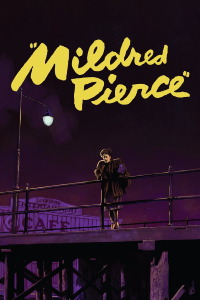
Review of Mildred Pierce (1945) by Rika O — 23 Aug 2011
Joan Crawford at Her Most Joan Crawford.
I saw this movie once before, a long time ago in a film class I took in college. It was about the history of the twentieth century through film, and this film was intended to represent the push to get women back into the home again after the relative freedoms they experienced during World War II, when they held their own jobs and had their own money. The point was to show the dangers that awaited women in the Real World, to show that it was better to be protected and cared for by a man than to risk become cold, hard, and unfeminine. It was one thing to hold a job because you had to, but the moral of the film is that there's an implicit danger to a woman in having an actual career, in doing anything other than living through and for her family. In a way, it works best because it's Joan Crawford, who might as well be the poster child for feminine independence. But no--she, too, needs a man to prevent everything from going wrong.
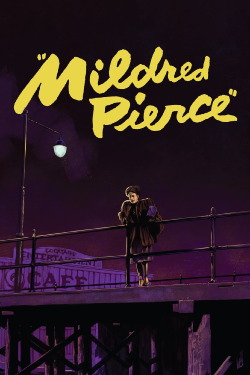
The story is told in flashback; Mildred Pierce Beragon (Crawford) is brought to the police station for questioning in the death of her husband, Monte (Zachary Scott). Her first husband, Bert Pierce (Bruce Bennett), has confessed to the crime. Mildred tells us the story of their lives. Bert wasn't able to provide for Mildred and their daughters, Veda (Ann Blyth) and Kay (Jo Ann Marlowe), at all, much less in the manner that Mildred thinks the girls should live. She starts out as a waitress and ends up running a chain of restaurants, divorcing Bert along the way. Alas, Kay dies of pneumonia. Veda is petty, selfish, and greedy. She scorns the source of the money--both the restaurants and her mother. She wants to live the kind of life Monte introduces her to, but Monte is only able to live that way on Mildred's money. He marries Mildred as a business arrangement--he gets the money, and Veda comes back into her life.
Of course, she'd be better off without her. Veda is an interesting contemplation of nature versus nurture, one which might have been more clear had Kay not so conveniently died. Did Mildred make Veda that way or was it born in her? Though I think it's possible that both are true. Mildred did raise Veda with a sense of entitlement, but she couldn't instill in her an impression that it took hard work to get what you want, at least most of the time. There's something missing to both Veda and Monte, I think, and I don't think that's entirely Mildred's fault. Both of them treat Mildred's work as though it's shameful. To both of them, there is something disgusting about restaurants. They both keep going on about the grease, though as Mildred points out, Monte doesn't exactly turn down fifty dollar bills that smell of it. It's also possible that there's something to the society she was raised in which had something to do with it. Any way you look at it, though, Veda was a horrible little thing who needed to be taken down a peg or two.
It almost seems as though Joan Crawford's entire career was built on watching her suffer. Whether this is to provide some kind of vicarious pleasure out of watching her overcome whatever-it-is or because audiences never entirely liked her is interesting to speculate about; Joan Crawford did have a long career, but she was never really lovable. It also seems as though the studios she worked for didn't know what to do with her, given how often she seems to have been stuck playing housewives. In this, she insisted that her clothes for the part were bought off the rack, which was true enough. However, she had them altered to fit her look, which kind of defeated the purpose. No one went to see Joan Crawford movies because they were just like her. She was, in whatever way you consider it, a kind of wish fulfillment. You either gloried in watching her overcome hardships or else reveled in her getting her just deserts, whichever you preferred.
The DVD release date on the HBO miniseries is unknown. I'm curious about it, because I'd like to see how certain aspects of the story are shown in a longer format which isn't hampered by the Code. I suppose this means I ought to get around to reading the book at some point, but I've not yet bothered. I tend to go through a fit of pulp reading about every other winter, so maybe I'll get to it come January or so. It is interesting to consider what was allowed in different formats at the time. The summary of the book on Wikipedia is much different from the movie, and I'm curious as to which way the miniseries goes. It is also true that I find Kate Winslet an inherently more sympathetic figure than Joan Crawford, and I'm looking forward to finding out how that shapes my perception of the story. The fact is, I don't like Joan Crawford and never much have. I dislike Veda in this even more, but as far as I'm concerned, the whole lot of them could go crashing into the ocean. This is not an attitude to take into a movie.
This review of Mildred Pierce (1945) was written by Rika O on 23 Aug 2011.
Mildred Pierce has generally received very positive reviews.
Was this review helpful?