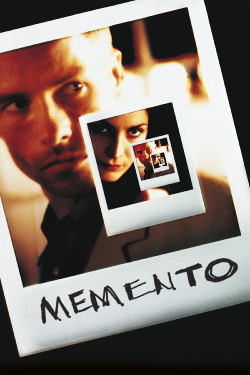
Review of Memento (2000) by Adam H — 03 Feb 2014
Leonard Shelby (Guy Pearce) is a victim of this mental condition, claiming that he can't remember anything after his wife was brutally raped and murdered. He has sworn revenge and obsessively searches anonymous motels and abandoned warehouses around Los Angeles in search of the killer. Shelby believes he has solved the murder at the beginning of the film and kills his suspect because he doesn't "believe his lies." We spend the next 110 minutes mostly going backwards to see how our narrator has solved the mystery and to see if he got the right man. (Though it may sound difficult to believe, I assure you that I haven't given away too much here).
There are actually some black and white snippets that objectively carry the plot forward if you watch specifically for them. There are other mysteries to resolve along the way, like who is the battered guy in the closet with the duct tape over his mouth?
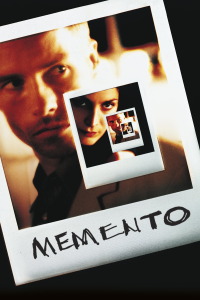
Memento weaves a mesmerizing puzzle that comes across like a hybrid of Tarrantino's Pulp fiction. We discover the missing pieces along with our unreliable narrator since he can only recall recent events by taking Polaroid photos, labeling them, and by tattooing key messages on his body. Like unfolding news events broadcast by clueless reporters, how accurate can those cryptic messages and pictures be?
Traveling backwards in time with Shelby, we become privy to his disoriented existence, only most of us have functional short-term memories. Indeed, during one sequence Shelby has to sort out whether he is chasing a gunman or is being chased by him. While the scene gives a chuckle, it also helps us realize Shelby's vulnerable condition. Each waking moment requires going through his photos and examining his tattoos anew, as he attempts to piece together where he is and what his latest task is.
If this sounds confusing, just check out the film. It makes a lot more sense visually than anything I could describe verbally. Similarly, detailed people are sure to find a plot hole somewhere due to the complexities of crossing time and sequence, but that's irrelevant. It can make for some interesting discussion afterwards, and I've found that people who have seen the film will often disagree over some plot ambiguities associated with the unfolding revelations near the end.
Memento works, and actually invites re-watching.
This review of Memento (2000) was written by Adam H on 03 Feb 2014.
Memento has generally received very positive reviews.
Was this review helpful?