Review of Memento (2000) by Jacob S — 21 Dec 2018
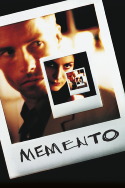
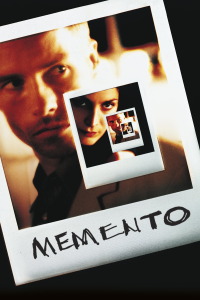
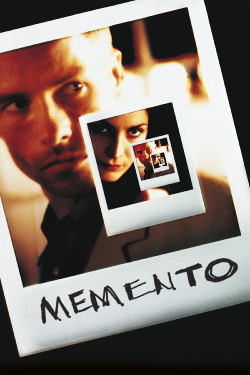
A non-linear story masterpiece, Memento is most definitely one of the most mainstream and best works of film in this new (at the time) versatile way of storytelling. Director Christopher Nolan expertly tells the story put of order on purpose and precisely to confuse the audience but what separates this movie from others is when seen in order this movie is masterfully woven and cinematography tight to keep the audience on the edge with a neat and tidy, albeit confusing movie, editing wise. Nolan uses everything in his ability from actor positioning to lighting in sound to tell the story and give it an ambiance of noir as well as suspense. The scene I specifically chose to analyze is about an hour in, when Sammy Jenkinâ(TM)s wife meets Leonard in his office. This scene had some rather interesting shots, edit cuts and mis-en-scene. It gave the viewer more insight on Sammy Jenkinâ(TM)s and his dilemma. In this film, particularly, Mise-en-Scene is very important. Nolan created every shot, every sound frequency and color pallet for a reason.
The shots in this scene are short and focus on the conversation between Leonard and Mrs. Jenkins. The opening shot in this scene is a medium close-up which in return establishes the characters, setting, and location I relationship with each other. The shot gives us insight on Leonardâ(TM)s job and office, he has his own office, so he could have been important, but then again Leonard isnâ(TM)t the most reliable narrator. The shot establishes a notion of power since itâ(TM)s shot from behind Leonard and showing his desk and objects on it, notifying the viewer that itâ(TM)s âhis deskâ?, establishing power with Leonard. A clue if looked carefully on Leonardâ(TM)s computer is seen. A note which suggests that even his memory then was not perfectly reliable and that foreshadows his use of notes after the accident to keep track of his life. Leonardâ(TM)s power cannot be more stressed in this shot, the camera wraps around his desk which also shows his diploma on the wall, suggesting he has a professional degree, which in this case is not specified as the shot is too far.
After these initial shots, the following shots are shallow-focused close-ups. The objects are no longer in view suggesting they arenâ(TM)t relevant as well as leading back to an idea that, âmemory can change the look of a roomâ?, as Leonard informed the audience in the film. When cut to Mrs. Jenkins the shots look a little off-centered, with a heavy amount of blurry object son the table behind her, clueing the viewer in on her unbalanced mental state. In contrast, Leonardâ(TM)s shots are well balanced and clear. If what Teddy said is true, this part of Leonard must be fabricated or blended in with some other memory because Mrs. Jenkins would really be a stand in for Leonardâ(TM)s dead wife. If you look closely she even looks like an older version of his wife. The mis-en-scene is so nondescript that it could easily be fabricated.
In conclusion this scene leaves so much subtle detail, but itâ(TM)s up to the viewer to pick it up. Leonard was in complete contrast of his usual, tattooed, unkempt hair, dirty clothed self throughout the movie. Teddy seems to be right; Leonard doesnâ(TM)t know who he is anymore.
This review of Memento (2000) was written by Jacob S on 21 Dec 2018.
Memento has generally received very positive reviews.
Was this review helpful?