Review of Mary and Max (2009) by Remote G — 01 Feb 2011
By Mathew Strowbridge for remotegoat on 05/11/10.
Mary Dinkles's family is so disturbingly bleak it is likely Mike Leigh will be taking notes. The young Australian is emotionally estranged from both her parents. A father who is employed on a production line attaching the strings to the tops of teabags. A mother who, when she isn't shoplifting, listens to the cricket and anesthetises herself on sherry.
As a girl, it is disclosed to Mary (Toni Collette) that babies are found at the bottom of beer glasses. And so, after falling upon a copy of the New York telephone directory, she writes to the American, Max Horowitz (Philip Seymour Hoffman), to query this peculiar revelation. "It would be great if you could write back and be my friend," she adds. Max does, and soon they are engaged in exchanging frequent and elaborate letters.
The middle-aged Max is unemployed and spends his life overeating in his New York apartment. Whilst a diagnosis of Asperger's syndrome means that Max has trouble communicating with others, he also has a deadpan turn of phrase that is delightfully comic as it is naive. He finds people "very confusing" and can not understand why they litter cigarette butts. He writes to Mary how "Butts are bad, because they wash out to sea and fish smoke them and become nicotine dependent." Then he adds, "I am just joking. Because, of course, it is impossible for a cigarette to remain lit under water. Also, fish do not have pockets to keep cigarette lighters in." This kind of gently deposited humour continues to drip slowly throughout the film.
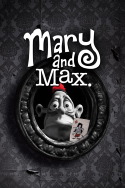
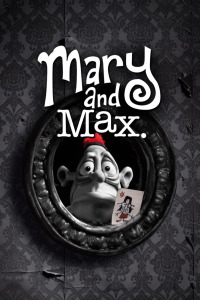
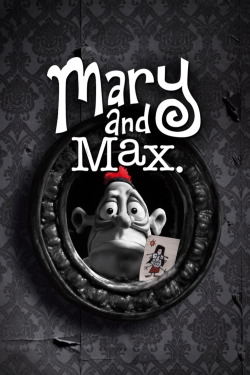
Mary and Max is a claymation feature and not technically or stylistically groundbreaking. Instead it perpetuates the same playful visual qualities of the Aardman Studios' creations. However, the film lacks the vibrancy of its predecessors and their full use of spectral colours. Here, the clay is instead a mixing of brown to grey, leaving a beige ambience in images of Australia, then an exegetical film-noir effect on New York.
It is predominantly an epistolary film. The two correspondents' voice over the words of each new letter as their thoughts are animated in pictures on the screen. We are talked through a stream of visuals with images appearing as the character talk over them. In any other film it could prove frustrating, yet here it has an insightful impact.
As Max's Asperger's causes him to misunderstand abstract or metaphorical concepts, the combination of words and images draws us into his world, highlighting the conflict between its appearance and how he comes to experience it.
This duality also creates comedy. Max reveals, "I used to believe in God. But have since read many books that have proven God is just a figment of my imagination." And the camera pans across a pile of books: the Bible, Religion Uncut, and Isaac Asimov. Maybe it was the nerd inside of me, but I chuckled all the same.
As the title characters' relationship develops slowly, our understanding of them does so much faster. They are made of clay but Max and Mary become human to anyone who can recognise their seclusion or ebbing confidence.
To those who find themselves so secure that they draw no empathy with this, Mary and Max will be no less of a success if it doesn't strike a chord with them. The film does not have a happy conclusion but one that is moving and heartening. I admit that I wept a little once it finished and, for this, I am not ashamed.
This review of Mary and Max (2009) was written by Remote G on 01 Feb 2011.
Mary and Max has generally received very positive reviews.
Was this review helpful?