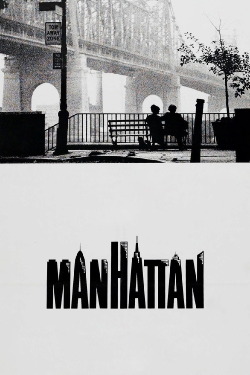
Review of Manhattan (1979) by Jay R — 12 Jul 2010
People just cannot get other people. After all of these advances in technology, science and communication, there is still one thing that we don't understand: other people. In a city of 1.5 million people, life moves so fast, it is almost impossible to keep up. We overcompensate to keep up with the times, in turn creating problems that we obsess ourselves over. These problems will forever keep us from getting the big picture. We are happy in our little lives, convincing ourselves we are moving forward because we solve those problems that obstruct our path in life. For Issac Davis (Woody Allen), the city of Manhattan is his closest friend.
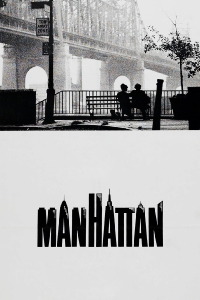
Woody Allen's Manhattan is a portrait of a city of connections, discovery and bustling business. Allen studies people in a matter of 90 minutes where we have felt like we have known them for years. Their idiosyncrasies, fallacies, successes and hardships become apart of our lives. As Issac searches for love in the title city, we see that he is confused and self-absorbed in his own thoughts and rants. After his ex-wife Jill (Meryl Streep) leaves him for a woman, he begins to date a 17-year old high school girl named Tracy (Mariel Hemingway). Issac is aware that this will go nowhere, he merely fills up the empty space he has in his life. Soon though, love begins to look real as he meets a mistress of his good friend Yale (Michael Murphy) named Mary (Diane Keaton). Manhattan is not so much a film, but an interpretation of how human attributes are the biggest fear of everyone. Even when situations are stable, emotions can change in the blink of an eye. Manhattan is one of the best human studies I have seen. It tackles the fear of not being in control of life. If there is one thing no one can control, it's human impulse.
The film begins with a voice over of Issac attempting to start a book he wants to write. He attempts to find the right words to describe the city of Manhattan him. He struggles to find the right words, because how you present yourself can make or break a bond. Issac has a void in his life after being sexually embarrassed and divorced twice. He overcompensates by dating a 17-year old girl. Awkward? Yes, but it never feels that way because Allen keeps his attention on how these people connect. Issac finds a chance to escape when he has a coincidental meeting with his best friend's mistress named Mary. This is chance for redemption. She is unsure, insecure and paranoid about everything she does. Mary is a mirror to Issac and this is a chance for the city to finally give back something to him. Issac loves Manhattan, but maybe to the point of frustration.
Humans are not stupid, but they make poor decisions. Not all humans are geniuses either, but we are problem solvers. Issac is a character who gets caught up in his own thoughts and comes off as neglectful. Issac is just a person that we watch, and Allen makes him so watchable. His city that he loves so much is starting to pick at his brain. Why can I not find a stable relationship? Why am I dating a 17 year old? What is love? Those questions are answered by the city landscapes. We peer off into scenery without any answer. Issac is a character who is metaphorically falling into an abyss. Every decision he makes seems to change his mind. He adapts to situations because of his fear of causing emotional shake ups. The falling finally stops in the film's final scene where Issac finally has to look at the world differently.
The city in itself is its own character. Issac talks about Manhattan as if it were a person. The buildings are the bones, and the people are the blood that keeps the city alive and vibrant. The most important part about Manhattan is its actual heart. Allen presents Manhattan as a friend who will always be there when times get rough. When the city starts to turn on him, he finds himself is more desperate situations. When he is forced to move to a dismal apartment, he begins to complain about everything in the city. The rusty pipes, the constant noise, the terrible water. He rants, raves and forgets that he has a situation to deal with in front of him. He is torn between a potential love and a love that can never happen. Issac even voices his concerns when he looks at some construction and says, "Wow, this city has really changed". Ironically, that quote is drowned out by the constriction noise. It is as if the city wants to stay the same to Issac. All Issac can do is hope for the best of a pitiable situation.
Diane Keaton is in the midst of business and organizational hell. In her best performance as Mary (from this to Because I Said So, how?), she strips Mary down as an insecure woman who is constantly reminding herself on how good she is. Issac attacks this later in the film when he says people make up their own problems to avoid the bigger questions. Mary keeps reminding herself of how good she looks when in fact she can't concern herself with the problems of dating a married man. Issac understands her pain because this city is confusing him as well. They come together because they want to understand. What you say? Life. Life can never be understood because everyone lives their own according to themselves. It is impossible to live according to someone else's rules because then you have no individuality.
This independence is why Issac cannot catch a simple break. His tragic flaw is that he thinks he has got an answer for everything. He has the solutions that he always talks about and wishes for positive things. There is a great scene where Issac talks to Yale and Yale has finally had enough of Issac's shenanigans. "You are so self-righteous, you know. I mean we're just people. We're just human beings, you know? You think you're God!" Issac immediately replies "Well, I've gotta model myself after someone." Issac's personality is now too obvious to us. He is a walking know-it-all convinced he can do no wrong. I quit my job, I'm going to write a book, life is grand. Everything he is doing doesn't move his life anywhere and he has absolutely no answers, just opinions. He dictates and diffuses serious situations to laugh them off. He is a romantic at heart, but a social repellant on the outside. He never allows other opinions to breathe and can never truly let anyone in.
Allen doesn't necessarily have a pessimistic view of things, he just shows off people for what they are. There are no protagonists or antagonists, themes or climaxes. This is just one man who cannot go with the flow of the Manhattan bloodstream. He is a clog in the arteries as he tries to make sense of romance, people, standards and culture. Issac relishes the fact he can help out anyone. No matter how self-absorbed, rhetorical, arbitrary these decisions the character make are, we can't take our eyes off of them.
With the films finale, Issac has a revelation of faith. I shall not spoil the ending, but Manhattan seems to come through for him in the end. Manhattan, the city and the movie, is not meant to be hated, but you won't like it at times. Manhattan also is so inviting and analytical that you want to learn more. Vegas is the city that never sleeps, Manhattan is the city that can never make up its mind. Neither can Issac. Is this a message about love? A hymn to a gorgeous city? A straightforward narrative of people? It is all of these. One message never dominates, and by the end, Issac will always love Manhattan. Only in a city like this can people be so free to say, do and choose what they want. Manhattan is a parent to Issac. The city allows him to make mistakes, learn from them and try again. Issac will always have that hope and faith in a better future for himself because Manhattan has taught him so much.
Manhattan also taught me a lot about film. This is a city on film, not a film about a city. Human beings try and fail. We put up barriers and obstacles so we can distract ourselves from questions we are afraid to deal with. Allen explores human interation with unerring grace and captures the essence of life in a hectic town. This is obviously a personal film for Allen and his passion comes through is his character and his beautiful shots of Manhattan. Even in black and white, this city has never been so rich with colourful persona. Allen explains people in a context we have never seen. He follows them, talks to them and presents complications for us to figure out. With the wordless orchestra playing the background, the only explanation we can get is from the characters. Allen himself once said, "Life is full of misery, lonliness and suffering, and it's all over much too soon." This sums up his character of Issac in Manhattan. Playing out like an old silver screen classic, Manhattan is a masterpiece. Woody Allen has made a drastic leap into developing people and dramatic integrity. You have to have a little faith in people.
This review of Manhattan (1979) was written by Jay R on 12 Jul 2010.
Manhattan has generally received very positive reviews.
Was this review helpful?