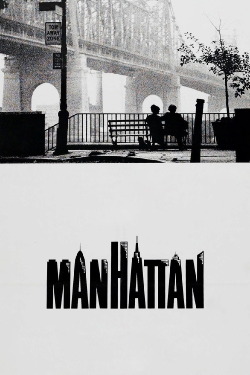
Review of Manhattan (1979) by Eric F — 07 Dec 2008
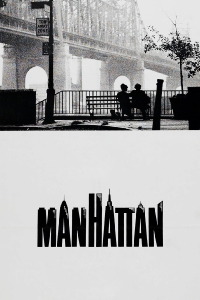
An overly neurotic Jew in New York is troubled by the women in his life. This could be on the back of the box of plenty of Allen's films - his characters are all very similar, the settings are similar, and even a lot of the same themes are rehashed. So what is it that makes Allen the filmmaker he is, and why is "Manhattan" considered far and above his best film by fans and critics alike? As many have pointed out, this is a close cousin to "Annie Hall", and almost identical to someone not giving each film their undivided attention. However, due to "Manhattan"'s extraordinary range of legitimate human depth and wonderful cinematography by Gordon Willis, it truly stands on it's own as one of Allen's best.
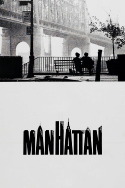
"Manhattan", set in 1979, opens with a montage of the city. Many of these images are familiar in some of Allen's other work, however the black and white cinematography gives the picture a feeling of timelessness. While his other films feel very true and the cinematography is kept simple, this is the most surrealistic Manhattan that Allen has created. Although neither Gordon Willis or Woody Allen blatantly says "look at me" with masturbatory details, it's subtle touches are always plentiful inbetween the truly spectacular sequences, such as the ones at the Hayden Planetarium or sitting by the river.
Issac (Woody Allen) is immediately identifiable as a Woody Allen character - he's twice divorced, struggles with work as a completely neurotic television writer (there's a funny scene where he complains his comedy show isn't funny enough), and although he's financially stable he's enormously unhappy. His current love interest is a 17-year-old named Tracy (Mariel Hemingway), and he is about 25 years her elder. Tracy is absolutely in love with him and she see's a bright future between them, while Issac certainly doesn't. This relationship doesn't seem to bother his friends at all, which was one small criticism I had with the film. Tracy, however, is a wonderful character, as although she is far and away the youngest in the film, she's the most confident and sure of herself.
Issac's best friend is Yale (Michael Murphy), who would seem to be happily married had it not been for the affair he's having with Mary (Diane Keaton). He hates himself for cheating on his wife, and Mary also doesn't feel comfortable in the "homewrecker" position. When Issac and Mary meet, Issac is infuriated with her. She boastfully puts down every one of Allen's artistic interests, especially Allen's real-life idol Ingmar Bergman. The two seem completely incompatible, however, that initial disdain eventually turns to friendship and even love. Issac selfishly tells Tracy he's found another woman he loves, which isn't entirely true, and in the end of the film we see how much he regrets it.
What is especially remarkable about "Manhattan" is the fact that Issac doesn't come off as a total creep. I'm sure all of us would have reservations about a 42-year-old man dating a high school senior, however their relationship seems to be more intellectual than physical (however, sex is mentioned in passing). What makes this couple so, well, un-creepy, is solely thanks to Mariel Hemingway. She's the most mature in the film, and therefore we eventually see her as wiser than Issac himself. By the end of the film, the only child in the film ends up being Issac.
Although "Manhattan" is a comedy, and a very funny one at that, it's really remarkably depressing. I really wasn't a huge fan of Allen's most blatant drama, "Interiors", however this one certainly is able to get across similar hopelessness in an unpretentious way. Issac's character is completely selfish, and we know that'll eventually lead to his downfall. Mary, who seems to be the shining star who has entered Issac's life, disappears by the end of the film. The final thing we see is essentially Issac doing his best to crawl back to Tracy. In this final moment of realization, it truly makes Issac's journey come to a clear end and it's a brilliant ending to the film.
I didn't like this as much as "Husbands and Wives" or "Hannah and Her Sisters", but I still very much enjoyed it.
This review of Manhattan (1979) was written by Eric F on 07 Dec 2008.
Manhattan has generally received very positive reviews.
Was this review helpful?