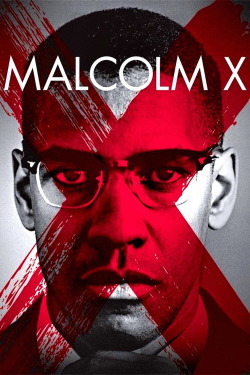
Review of Malcolm X (1992) by Michael C — 20 Jan 2010
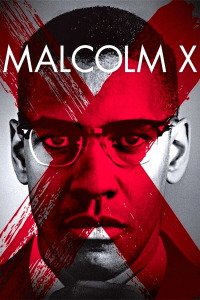
Spike Lee might be one of the most underappreciated auteurs in the film industry, primarily because his absurd politics obscure the talent that is bursting from most of his films. As a result of his racially obsessive politics several of his films dealing with race have been viewed as too radical to give a fair chance, and at the top of this classification would be the 1993 biopic on controversial civil rights leader Malcolm X. However, Lee does something incredible with X's life: he doesn't promote racism through depictions of X's life, but instead shows that even the most ardent supporters of such corrupt thinking can change.
Malcolm X is a racist man in this film. Granted he has several admirable traits: he elevated himself from the slums of crime and society, he is a passionate man with a moral code and true convictions, he is self-educated on a level few human beings are, and most of the time he is charming. And yet any time those qualities start to flourish we are presented with X's outcries and racist tirades that only serve to distance white and black races further. Many might suggest that Lee is presenting this as a positive thing, but X is continually shown to be wrong in this mentality. When he finally sees the error of his ways shortly before his death and changes his ethos to one accepting of all races, the true message of the movie is presented: being a decent, good person is incredibly difficult, and often when trying to find the path of decency we get lost and must find out way back.
Washington is astounding in this film. Why he didn't win the Best Actor Oscar is beyond me, for out of a career of powerful, penetrating roles this is his most impressive work to date as an actor. He doesn't try to make Malcolm X too deified or too villified, but presents him in full, with his merits and his MANY mistakes and flaws intact and ever-present. This film packs such a tough punch and at first it seems X can't be made into a character we care for because of his divisive politics but in Washington's hands he makes it effortless. Lee's direction is the other star of the film; beautifully fluid editing, incredible tracking shots, and in general fantastic shot construction makes this film a feast from a technical level. Lee has always had a technical virtuosity to his style (having been mentored by Martin Scorsese surely didn't hurt), and it is most obvious here.
Malcolm X belongs among the best biopics to come out of Hollywood, especially because it pulls no punches in portraying its controversial source in a "warts and all fashion".
This review of Malcolm X (1992) was written by Michael C on 20 Jan 2010.
Malcolm X has generally received very positive reviews.
Was this review helpful?