Review of Make Way for Tomorrow (1937) by Elliott F — 26 Dec 2010
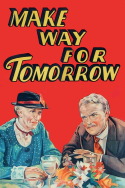
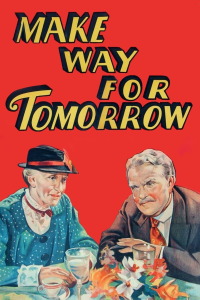
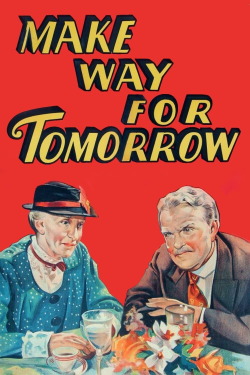
Leo McCarey made two films in 1937. The first was the screamingly hilarious and immensely successful comedy The Awful Truth, for which he won 1937â(TM)s Best Director Oscar. The second was Make Way for Tomorrow, a little-seen-until-recently gem, which Orson Welles described as a film that âcould make a stone cry.
â? Make Way for Tomorrow caused little fuss when it was first released, and, although it got good notices, nothing came of it. When McCarey accepted his Oscar for The Awful Truth, he said, âThank you, but Iâ(TM)m getting this for the wrong picture.
â? The story is fairly simple: during the Great Depression, an elderly couple is forced to give up their house, and they must separate and live with their grown-up children and their families for a couple of months before they can find a place to live together again.
The wife (Beulah Bondi), Lucy, goes to live with their son George (Thomas Mitchell), his wife Anita (Fay Bainter), and their daughter Rhoda (Barbara Read) in New York City, but she soon discovers that she doesnâ(TM)t fit in and is little more than a burden to all of them.
The husband (Victor Moore), Barkley, goes to live with their loud, ill-tempered daughter Cora (Elisabeth Risdon) and her unemployed husband Bill (Ralph Remley), 300 miles away from New York. Both individuals realize that they just donâ(TM)t belong where theyâ(TM)ve been placed, so a conclusion is made: Barkley, who had recently been very ill during the winter, will move to California to live with their fifth child (who is never seen), and Lucy will move to a retirement home so that she can stop being a burden to George and his family.
Barkley has to come to New York to meet his train, so the two have one final outing together. What commences is one of the most beautiful and viciously sad sequences ever put on film, as the two revisit the hotel they stayed at on their honeymoon.
Make Way for Tomorrow had a much larger impact in Japan upon release; it inspired Yasujiro Ozuâ(TM)s universally-regarded masterpiece Tokyo Story, another well-known tearjerker. Easily one of the saddest, most romantic films ever made, Make Way for Tomorrow stays with you long after Barkleyâ(TM)s train leaves the station.
This review of Make Way for Tomorrow (1937) was written by Elliott F on 26 Dec 2010.
Make Way for Tomorrow has generally received very positive reviews.
Was this review helpful?