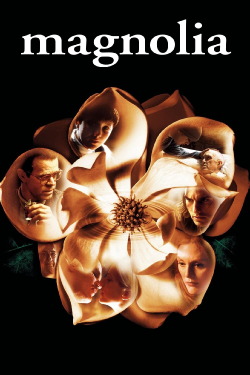
Review of Magnolia (1999) by Qi Z — 13 Jul 2016
I thought about Book of Job when I watched this movie. The manifested forms of suffering ranged from the physical (such as dying and disease), psychological (past abuses, current self-inflicted addictions, parental control, spousal disharmony), and spiritual (the maimed soul by cruelty and neglect, in the case of the character by Tom Cruise, and others), and the tangled web through the interactions of human beings with one and other through chance and chaos.
The rain of fogs has a touch of cosmic mystery both awesome and terrifying, but the storm of frogs changes the mental and physical reality of people endured in the storm. Some decks are reshuffled and given another chance to play it right; some are wiped away, while some remain the same. However, the movie is ultimately optimistic in the power of human love and forgiveness in making life meaningful and endurable. The divine power in this film is not the cuddling micro-manager of sweetness, but a stern, inscrutable force giving human the full lot of freewill, redeemed only the the potentiality of love and forgiveness. It is up to us to make heaven or hell in our own lives; we don't need hereafter to know where we live in the Dantesque Comedy here on earth. The Freewill reigned supreme in those cruel old men who inflicted so much damage to their children. That is true Freewill, unadulterated by wishful-thinkings. That is the darkness of human souls. The next generation may continue, given the inheritance of their anger and pain, to inflict new pain upon their own children. Cruise's character is the manifestation of burying deep suffering through inflicting suffering. However is also reign supreme in the act of love and compassion of hospice nurse, the policeman, and the trophy wife played by Moore.
This review of Magnolia (1999) was written by Qi Z on 13 Jul 2016.
Magnolia has generally received positive reviews.
Was this review helpful?