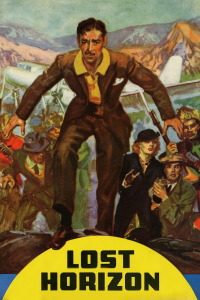
Review of Lost Horizon (1937) by Jose Luis M — 11 Jan 2015
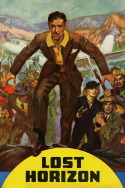
"Lost Horizon" is a fantasy dream of epic proportions, making for an appealing blend of blithesome pleasures and complex symbolism. From one side, it's a beautifully photographed adventure in the same vein of a Michael Powell and Emeric Pressburger collaboration, but on the other, it has the cerebral heaviness of a playful "Metropolis.".
Directed by Frank Capra, master of the feel-good masterpiece ("It Happened One Night," "It's a Wonderful Life"), "Lost Horizon" was the result of a passion project, marred by serious budgeting and running time issues. Originally, the film was nearly six hours in length, with an ardent Capra shooting every scene from an overzealous number of angles. For a scene lasting just four minutes, Capra would use over 6,000 feet of film, the amount normally used for an hour's worth of photography. The budget swelled to almost $3 million, thanks to the extensive use of exterior shots and the hazardous dilemmas caused by the snowy sets. I could go on, but a happy ending is in store, and, if you're more curious than you'd like to admit, Wikipedia is readily available.
Ultimately, Capra, along with Columbia boss Harry Cohn cuts hours upon hours of footage, much of it lost over the years. The film was restored in 1999 and again in 2013, inserting still pictures in certain scenes to fill in gaps left by regrettable cuts. Presently, "Lost Horizon" is a woozy combination of crisp repairs, slightly murky discoveries, and awkwardly placed pictures. In many cases, impartiality can be highly destructive. "Lost Horizon" is one of the lucky ones. It's so self-assured in nearly every other category that the cruelty it was once thrust into in the editing room is completely forgivable. Capra despaired over the film until the day he died, but it's hard to believe that a movie as stimulating and as effortlessly paced as this one could have been marked by even the slightest of a difficulty. It's a forgotten classic.
Adapted from James Hilton's 1933 novel of the same name, the film focuses on five refugees who escape a violent revolution in China. After a long night of flying, Alexander Lovett (Edward Everett Horton), the stuffy intellectual of the group, looks out the window as is astonished by what he sees - it appears that they are traveling in the completely opposite direction of their destination. They have been kidnapped.
The plane eventually crashes in an undiscovered zone in the Himalayas, killing the pilot. The group is quickly discovered by a Chinese caravan, who then leads them to an oasis within the mountain range, known as Shangri-La. Shangri-La is ethereal, to say the least. It's an entrance to an entirely new world, where the skies are always sunny, the flowers are always in bloom, the people are always good-hearted, and aging isn't a consideration. The leader of the group, Robert Conway (Ronald Colman) is instantly smitten - but will he, along with his fellow travelers, last in this too-good-to-be-true idyllic land?
Films in the 1930s were almost strictly uplifting, dressed to the nines in screwball comedies, musicals, and set designs that suggested that poverty didn't exist and even the nobodies could afford butlers and caviar. Turn to any Rogers & Astaire pairing, any Ernst Lubitsch romp - that was 90% of what audiences were used to. Everyone wanted a break from The Great Depression, after all.
"Lost Horizon" retains the uplifting persona of the era, but avoids all the first class garbage that felt delicious at first but eventually left a bad taste in your mouth. It is, first and foremost, an adventure film, making you feel like a child again at every turn. Shangri-La is a bewitching world that makes the fantasy genre seem delightful all over again, and the fact that it lies somewhere deep in the Himalayas makes it all the more special, all the more untouchably engaging. It is heaven for people who have goodness in their hearts, but it's a hell for those who are too self-serving and sinful. But forget all the heaven and hell comparisons - "Lost Horizon" is escapism of the highest common denominator. You'll want to be swept away, not sit there with analytical expectations.
Much of the film's success is largely due to Capra, who, despite the setbacks he faced while filming, makes a movie so easy to devour that you can't help but want to have more. He's always been able to piece together a popcorn film with brains, but "Lost Horizon" is certainly his most ambitious moment. Though his own unrealistic goals pushed film's budget to places it couldn't afford, the result is something of a wonder. The sets are absolutely stunning, combing Asian decor with art deco modernness, and the photography, however indulgent it may be, is lively and plenty dreamy, the black-and-white giving it an innocent, fantastical ambiance.
"Lost Horizon" could have been damaged goods, but it overcomes those damages and becomes goods for the ages. Capra may have sweat a bullet or two, but one can hardly remember "It's a Wonderful Life" when swept up into the luster of "Lost Horizon.".
This review of Lost Horizon (1937) was written by Jose Luis M on 11 Jan 2015.
Lost Horizon has generally received very positive reviews.
Was this review helpful?