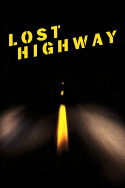
Review of Lost Highway (1997) by Al M — 28 Jan 2011
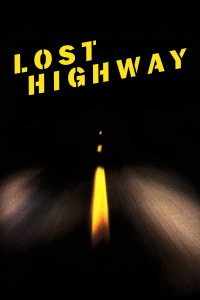
Lost Highway represents Lynch's first post-Twin Peaks film, and it immediately polarized critics and audiences--it was either a work of genius or a pretentious, incomprehensible piece of arthouse garbage.
As you can no doubt tell from my rating, I side with the former group. Lost Highway is a stylish blend of horror, film noir, and surrealism that explores the nature of human desire in a powerful and visceral manner.
The film features an absolutely stellar soundtrack produced by Trent Reznor that features David Bowie, Nine Inch Nails, Marilyn Manson, The Smashing Pumpkins, Rammstein, Lou Reed, and of course the score by Lynch's longtime collaborator Angelo Badalamenti.
A superb cast also adds to the film's impact, but it is Lynch's hyper-stylized, visual journey into the unconscious that makes Lost Highway a truly great film. When watching Lost Highway, you cannot expect to apply and sort of real world logic to the film; instead, you must be willing to submit to its dreamlike flow of images, sounds, and stories.
Structured like a circle or Moebius loop, Lost Highway repeats itself, blurs the lines between reality and dream, and ultimately attempts to depict human desire as its own lost highway. If there is ever a film that depicts Jacques Lacan's concept of desire, it is Lost Highway.
According to Lacan, desire can never be fulfilled because desire is always the desire for desire. Hence, desire represents our attempts to fill a hole in ourselves that can never be filled--desire is a lost highway down which we forever race without ever actually getting anywhere.
This review of Lost Highway (1997) was written by Al M on 28 Jan 2011.
Lost Highway has generally received positive reviews.
Was this review helpful?