Review of Lost Highway (1997) by Blake P — 31 May 2014
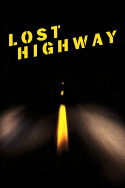
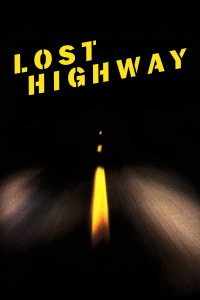
The most resonant image in the hypnotizing "Lost Highway" is the highway itself. Filmed in a pitch black hue with only headlights as our guide, the road, moving with outrageous speed with neon yellow lines humming with a certain steam, is directionless, so unpredictable that we can't help but stare in helplessness, wondering if at any minute the car will hit someone with empty force. The zooming and out-of-control pace of the car serves as a sort of reflection for the film itself - while it is without meaning, it's so magnetic and so transcendent to watch that you lose yourself in the journey. Lynch is more concerned with atmosphere, not plot. And for two-hours, he succeeds.
Beginning in silence and crackling loneliness, a man is our focal point. His name is Fred Madison. He is a saxophonist, is married to an Ava Gardner look-a-like named Renee (Patricia Arquette), and is played by Bill Pullman. That's all we need to know, and that's all we find out. But we can see that he and Renee, despite the sexual tension between them, have distrust that stems from either worries of infidelity or danger. Whenever they speak, it is cloaked in a sort of carefulness that suggests that, if someone says the wrong thing, it will end in murder.
Out of the blue, they begin receiving mysterious tapes in the mail that suggest that someone is watching them in and out of their home. They become increasingly unsettling, and after a strange conversation with a man decked out in white makeup who seems to be behind the recordings (but also seems to transcend time and space), a videotape shows up that sees Renee murdered - without warning, Fred is sent to prison with a life sentence under his belt, and only after a few days in his cell he is suddenly transformed into a young man (Balthazar Getty), a mechanic that has an affair with a brutal gangster's (Robert Loggia) moll who looks exactly like Renee, in Phyllis Dietrichson mode.
Fred's metamorphosis into Peter is never explained, but by the time it occurs in the film, it's clear that nothing will ever truly make sense because a) it's a David Lynch film and b) everything on display is like a hallucination, a combination of an abstract dream and an inescapable nightmare. "Lost Highway" combines film noir, horror, and gangster violence into one massive art project that never truly makes sense - but yet again, Andy Warhol never truly made sense but still fascinates audiences today. True, "Lost Highway" rings with glamorous emptiness, but it's a glamorous emptiness that is attractive beyond belief. It's an exercise in sheer style that transcends the ideals of film and reminds us why David Lynch is a master of modern abstraction. He doesn't do anything hastily - everything is deliberate and sumptuously shot.
He pays homage to Hitchcock (the dual role of Renee/Alice is a twin image of Kim Novak's portrayal in "Vertigo"), delivers twisted violence with a sort of gleeful ferocity (Mr. Eddy's intensely over-the-top punishment of a tailgater, which is at once funny and startling), and invites in characters that defy logic (Robert Blake's Mystery Man has sadistic enigma that serves as a reminder of "Twin Peaks" villain Killer BOB). The film is a work of complete originality, sometimes causing us to scratch our heads, but in other moments, it's easy to appreciate how willing Lynch is to invite us into his mind.
"Lost Highway" is a different kind of masterpiece. We can never bathe in it, only look at it - but what we see is so stupefying that it remains unforgettable for days.
This review of Lost Highway (1997) was written by Blake P on 31 May 2014.
Lost Highway has generally received positive reviews.
Was this review helpful?