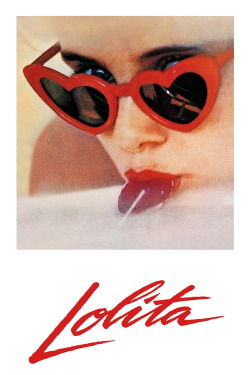
Review of Lolita (1962) by Zach B — 12 Jun 2011
By now in Stanley Kubrick's career as a film director, he has already made his name known with the films Fields Of Glory and Spartacus (winner of Best Supporting Actor). So, film companies were basically fighting over who was to have him direct their next film.
And the film that Kubrick had in mind, would be one that shocked the world (and the first wave of change Kubrick would do with cinema). Around the world in Russia, there was a man by the name of Vladimir Nabokov who was enjoying his life as an author.
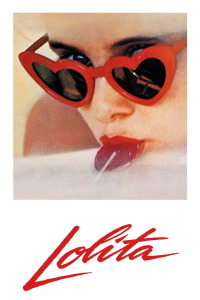
He had recently released a rather interesting and risky novel by the name of LOLITA which was about a forty two year old man that falls in love with a twelve year old girl and vice versa. The novel stunned and shocked critics with the main idea behind the novel was that it is the most realistic and true romance tale of all time.
When Kubrick took the script and made it into a film, well, the question that everyone asked was "How did they ever make a movie out of Lolita?". Well, in terms of direction, there never was a direct adaption.
One thing about Kubrick and all of his films that followed after LOLITA was that we would take the source material, read threw it, then make his own interpretation of the story. When Kubrick received Nabokov's original screenplay, it was about four hundred pages long which, in turn, would have made a film that was about seven hours long.
So, Kubrick had to rewrite the script to make it fit a two and a half hour long time span. But one thing he, Kubrick, allowed with his direction was to have the actors improvise any lines that they saw fit for the screen play if wanted.
So, with the direction, Kubrick took a mega risk with altering the script and allowing the actors to do what they want with it. The end result would be one of the first of many masterpieces made by Kubrick.
Now, with acting, with most people improvising their lines, I must admit that they all do a beyond fantastic job. But, we all know who the two best actors are: James Mason and Peter Sellers. For Mason, there is just something heart breaking about him and his rather unorthodox love for Lolita in the story.
For Sellers, he just does his own terrific job that would end up leading him to be in Kubrick's next film. Before Kubrick went all Classical with his music, his early films had a contemporary style that reflects the time it was made.
For me, the music in this film was something that just did not affect me nor was noticeable like other film scores. So, overall, this is an early example of what Kubrick would later do with the genres of film and the power he had behind camera.
This review of Lolita (1962) was written by Zach B on 12 Jun 2011.
Lolita has generally received very positive reviews.
Was this review helpful?