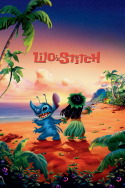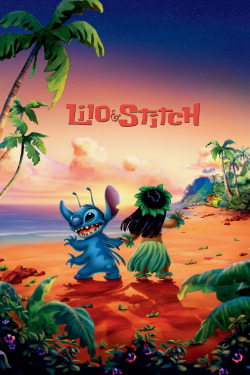
Review of Lilo & Stitch (2002) by Edith N — 19 Jul 2010
But Are They Real Americans?
Every time I see the little red-haired girl in this, Myrtle (Miranda Paige Walls), what I actually think of is Gwen's time growing up in Hawaii. Clearly, this girl is having a better time of it socially. Gwen and the Lawsons all had one another, but I know they all had difficulties being the White Kids in multi-ethnic Hawaii. There were also some social and cultural issues there; I suspect the Hippie Parents thing didn't help them get along with their peers. However, all this background knowledge means I can't quite believe her as the head of a clique. Oh, sure, stranger things have happened, but it does tend to feel as though they've added a white girl to the movie in the belief that they have to have more white people than just the tourists who so fascinate Lilo (Daveigh Chase). It's back to the old debate about what constitutes "universal," I guess.
The movie starts with the origin of Experiment 626 (Christopher Michael Sanders), which is my mom's area code. Anyway. This is really just to set up that he's a fugitive and that Pleakley (Kevin McDonald) and Jumba (David Ogden Stiers) are going after him, Pleakley because it's his job and Jumba because he created 626 and might get a pardon if he locks him back up. However, more important is the relationship between Lilo and her older sister, Nani (Tia Carrere). Their parents died not long ago, and Nani is having to maintain a job and raise her troublesome younger sister. Which includes appeasing Scary Black Man social worker Cobra Bubbles (Scary Black Man Ving Rhames). In hopes of settling Lilo some and getting her a friend who will stay with her, she takes Lilo to the pound to pick out a dog. 626 has been brought there after being run over by several eighteen-wheelers in a row, and Lilo decides that he's the one she wants, and she names him Stitch. She declares him to be ohanu, family.
One of the ways this is a family movie, not a kids' movie, is that Nani's concerns are given equal weight. Lilo is not easy to live with, and it becomes pretty clear that she wants to be seen as a poor, unfortunate, put-upon child. She's young enough that she doesn't realize it will entail getting taken away from Nani, not just being more likely to get her own way. Nani is trying to do right by her little sister, and it's abundantly clear that Lilo doesn't get how much work that takes. Both girls are inherently flawed; Nani has a short temper, for example. It seems to be a family trait. But Nani's concern about finding a job strikes home to adults, and they can recognize her frustration with Lilo from their own dealings with their children. And it's worse for Nani, because she's having to change jobs. Lilo says she liked Nani better as a sister than a mother, and doubtless Nani likes Lilo better as a sister than a daughter.
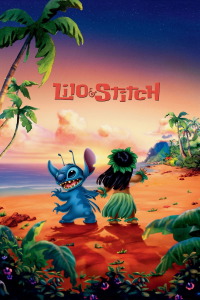
The art of this movie is really striking. I think some of Disney's most beautiful films come from borrowing ideas from one source or another, and the watercolour backgrounds here have a light feel more suitable to its subject matter than traditional backgrounds would be. When people think Disney, they think Generic Fantasy European, though several of the studio's major works have been set elsewhere. Another style was needed, I think, to set the movie apart from those, and the softness of watercolour does just that. Indeed, there are several scenes where the clouds call to me Maxfield Parrish, who funnily enough didn't work in watercolour. (The Parrishiness was the only thing I really liked in [i]Brother Bear[/i], for the curious.) It is also interesting how people are portrayed. The tourists are pretty well caricatures, but the locals are really lovely. The women especially--even Nani is a little heavier than is typical in animated women, and while essentially none of the hula dancers are as large as some of the ones in the real footage they studied to create the sequence, they aren't toothpicks, either.
I guess my problem, my only real problem, with the movie is its legacy. Sure, more so than most other Disney movies, this left itself open for sequelling. The other issue of Disney's focusing so heavily on the fairy tale is that, let's face it, we end with "happily ever after." This one, however, begs for more adventures with the characters. It's actually at least vaguely interesting to speculate about what comes next. The problem, however, is that we really didn't need to consider what happened to the preceding 625 experiments, and there's no reason to believe there would be any way for any of them to reach Earth. However, the real story of these characters is a bit more . . . complex than animation wants to be now. I mean, let's not forget that an important part of the story would be Nani's boyfriend, David (Jason Scott Lee), and adult relationships are not something we teach kids about. Not even so harmless ones as this.
This review of Lilo & Stitch (2002) was written by Edith N on 19 Jul 2010.
Lilo & Stitch has generally received very positive reviews.
Was this review helpful?