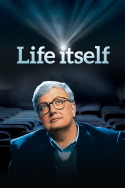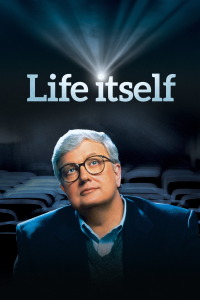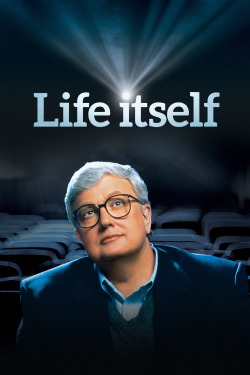
Review of Life Itself (2014) by Harry W — 19 Jan 2015
With Roger Ebert being arguably the greatest film critic in history, a feature length documentary about his life and passion sounded unmissable.
The amount of detail in Life Itself is beautiful because it really does a strong job of explaining the legacy of Roger Ebert while also telling his life story with detail on how he came to be and where he got his talents from. While the length of Life Itself may feel like certain aspects of it are a bit of a stretch, the fact is that there is so much detail in the life of Roger Ebert that I never knew about, and after seeing Life Itself I must say that he seems like a more fascinating subject than ever before.
Life Itself is a wonderful documentary. It chronicles the large life that Roger Ebert led, from his childhood to his death in extraneous and impressive detail. Taking excerpts from many articles he has written over the course of his life, Life Itself chronicles the progression of Roger Ebert from the young and deteremined voice of a nation who was never afraid to speak up against something he did not approve of to a sensational film critic and star of a popular television series. Life Itself is all about Roger Ebert, and it shows off just how much of an intelligent person he was through his writing and his articulation of language on TV as well as the way he interacted with people in general. Martin Scorsese is interviewed in Life Itself to talk about the kind of honour he felt after receiving recognition from Roger Ebert, one of the contributing factors that led him to make his 1980 sport biopic masterpiece Raging Bull. Conversely, Life Itself also points out how both Roger Ebert and Gene Siskel were vocally negative about Martin Scorsese's Academy Award winning 1986 film The Colour of Money. This points out the fact that Roger Ebert had friends, but he never let friendship blind his vision for what was valid cinema to him and what was not, while also touching upon the fact that his opinion was one that people really valued. The film does a good job of pointing out his influence.
One plot point that seems to be missing from Life Itself is Roger Ebert's infamous conflict with director Vincent Gallo about his film The Brown Bunny. Since the documentary is adapted from his autobiography it covers his own material and more him as a person as well as the more high profile events in his life, as well as the fact that it covers so much ground that it is very admirable for doing so. But I feel that the relationship he shared with Vincent Gallo deserved documentation. After the release of Vincent Gallo's 2003 boredom inducing indulgence project The Brown Bunny, Roger Ebert declared it the worst film in the history of Cannes. Vincent Gallo responded by calling Roger Ebert by calling Ebert a "fat pig with the physique of a slave trader." Paraphrasing a statement attributed to Winston Churchill, Roger Ebert responded by saying, "It is true that I am fat, but one day I will be thin, and he will still be the director of The Brown Bunny." Vincent Gallo then claimed to have put a hex on Ebert's colon, cursing the critic with cancer. In response, Roger Ebert claimed that watching a video of his colonoscopy had been more entertaining than watching The Brown Bunny. Vincent Gallo stayed that he had intended the comment to be a joke which was mistakenly taken seriously by a journalist. He mentioned that he found Roger Ebert's comments about his colonoscopy to be an amusing comeback. After the war of words between filmmaker and critic reached a solace, Vincent Gallo took the criticism on board and edited his film by removing 26 minutes from it. According to Roger Ebert "Gallo went back into the editing room and cut 26 minutes of his 118-minute film, or almost a quarter of the running time. And in the process he transformed it. The film's form and purpose now emerge from the miasma of the original cut, and are quietly, sadly, effective. It is said that editing is the soul of the cinema; in the case of The Brown Bunny, it is its salvation." While I remain adamant that The Brown bunny is a poor film and many people would agree, the general consensus is that the edited version is of superior quality to the original, and this represents a time in film history where Roger Ebert's criticism contributed to actively improving a film. While he did so much in his life, Roger Ebert will always be remembered mostly for his contribution to cinema critiquing and I feel like this one point in his life would have been very relevant to the documentary. But that is just one point in the massive legacy of Roger Ebert. Considering how much the film emphasizes his relevance to the cinematic universe and how much he was valued as well as the connection he shared with his wife and family, it touches upon more than enough depth to make up for this.
Life Itself gets really clever and hilarious when it begins to explore the relationship between Roger Ebert and Gene Siskel. As the two hosted a film reviewing television show together for 13 years, the legacy of these two is very important as the banter they shared in critiquing films was mercilessly genuine. With Roger Ebert and Gene Siskel being compared to Dr Jekyll and Mr Hyde, they were known as opposites who shared an underlying mutual respect but were merciless with throwing words at each other or arguing over what constituted a good film. The footage of these two engaged in banter is the funniest part of the film, and Steve James does a perfect job of bringing it to light. The documentary even lightly touches upon the fact that Roger Ebert and Gene Siskel were the only two mainstream critics to give positive reviews to Speed 2: Cruise Control when it was so critically panned and they were the two most popular US critics. While this could have been slightly more emphasized, it does point out that their opinions were not always popular but that they were always willing to back themselves up and not take criticism from others simply for having an opinion. In short, Life Itself really does justice to honouring the legendary duo of Siskel and Ebert, making audiences laugh and learn in the process without genuinely feeling something for them. Viewers are unlikely to walk away from Life Itself not having felt the cultural enrichment of learning all about these two, in particular Roger Ebert, and so director Steve James deserves a lot of important recognition for Life Itself. Had Roger Ebert been alive to see the final product, I have no doubt that he would praise the documentary very much. The thing that makes Steve James perfect for the role of director was the fact that he directed the famous documentary Hoop Dreams which followed two African-American teenagers over the course of 5 years as they grew up with dreams of joining the NBA. Roger Ebert and Gene Siskel both named Hoop Dreams the best film of 1994 and Ebert later referred to it as the best film of the decade as well as campaigning for it to be nominated for the Academy Award for Best Picture. To have the director of that honour the life of Roger Ebert is truly the perfect way to do it, and he treats Roger Ebert's story with all the touching sentimentality and warm humour that comes with it all without ever having to dramatize things. One of the key things that Life Itself points out is the struggle that Roger Ebert faced later on in his life with his throat being removed. To do this, the film confronts Roger Ebert in his physical state, showing his distressed physicality and how he acts without a jaw. The sight can be startling at first, but viewers see in his eyes and his determination to keep writing that he still has all his spirit active within him which is really a wonderful thing to behold. Viewers get this and follow him until he passes away with a treatment which is very respectable. Steve James covers the story incredibly well and lifts the spirits of viewers, entertaining them and teaching them all kinds of things about film history as well as what it is to be a film critic. Life Itself actually encouraged me to become a better critic myself and write things in more detail with less repetition, so the film itself is uplifting and inspiring for the right person.
So Life Itself may miss some plot points and go on for a long time, but it is a thoroughly touching, hilarious and inspiring look at the life and work of Roger Ebert as well as the second greatest documentary of 2004.
This review of Life Itself (2014) was written by Harry W on 19 Jan 2015.
Life Itself has generally received very positive reviews.
Was this review helpful?