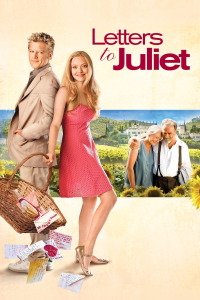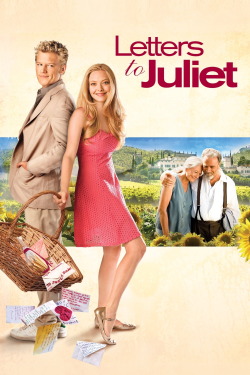
Review of Letters to Juliet (2010) by Martin D — 17 Sep 2011
Sophie and Victor are passionate young people, but just not about each other. She wants to write, he's about to open a restaurant, and their blissful Italian sojourn turns into a model of the stressed-out, competitive metropolitan marriage that would surely follow. (Not that there's any real danger of that.) They chat and text each other, but mostly go their separate ways - "win-win," as Victor puts it - he to hunt down culinary delicacies, she to chase after a story that turns out to be Claire's.
First, though, Sophie happens upon a group of Italian women known as Juliet's secretaries, who gather the letters that lovelorn ladies from around the world have tucked between the stones of a wall under the most famous balcony in Verona, opening their hearts to love's great martyr. Each petitioner receives a reply, and Sophie decides to answer a melancholy note that has been languishing there for half a century. Its author was Claire, a British exchange student who was supposed to meet a local beau named Lorenzo, but then succumbed to cold feet and went back to England.
Now, lured by the response that Sophie has written, Claire is back in Verona, along with a handsome blond grandson named Charlie (Christopher Egan, basically Ryan Phillippe with some of Hugh Grant's mannerisms), whose instant detestation of Sophie is the first sign of impending love. Claire is determined to find her Lorenzo, and she, Charlie and Sophie set out on a meandering and picturesque road trip, encountering a series of codgers named Lorenzo, each of which would be happy to be the right one.
For much of its running time, "Letters to Juliet" is content to provide touristic evidence that Italy exists: hillsides bathed in golden light; steep and stony little towns; tile roofs and gently sloping vineyards. The human scenery suggests that time stopped sometime after Shakespeare but long before Berlusconi, and that Italy's authentic cultural role is as a colorful background for Anglophone romance.
That conceit worked reasonably well for Henry James and E. M. Forster, whose august shadows occasionally fall over this sunny and superficial trifle. Ms. Seyfried shows some of the charm and verve of those authors' expatriate heroines, and it is hard not to root for Sophie's happiness, even as the film carefully spares her the risk of serious heartache.
"Letters to Juliet" is the fourth movie Ms. Seyfried has appeared in this year,(2010) and it, along with the romantic weepie "Dear John," is likely to consolidate her position as a certified movie star. And while she has yet to perform a feat of bravura big-screen acting (her best work is still on the HBO series "Big Love"), her combination of stubbornness, vulnerability and practical good sense makes her appealing to just about any imaginable audience. She is to the verge of tears what Kristen Stewart is to the bitten lip: a virtuoso of barely restrained and tantalizingly ambiguous emotion.
Which makes her, like Ms. Redgrave, a little more interesting than the movie she's in. It's not that "Letters to Juliet" is bad. If you want a bad romantic comedy, I can give you a long list. But being able to like a movie of this kind is a form of disappointment, since what you want - what you are promised - is love.
This review of Letters to Juliet (2010) was written by Martin D on 17 Sep 2011.
Letters to Juliet has generally received positive reviews.
Was this review helpful?