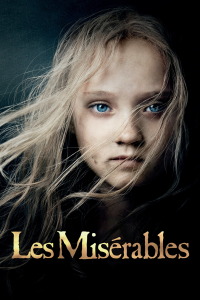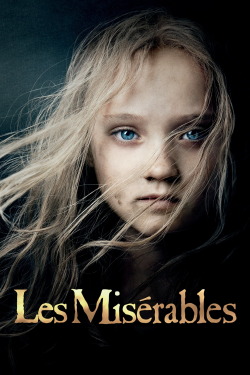
Review of Les Misérables (2012) by Hiatt N — 23 Jan 2014
This is a fascinating film, simply because it's a movie of extremes. Hooper has made some decisions (live sound key among them, bizarre cinematography another) that lend this film to either soaring success or crashing failure. First let me say that I am impressed with the bravery of all involved.
Interestingly enough, the film never settles at one end of the spectrum: it flies back and forth between good and bad so rapidly it threatens to lose its viewers. If we start on the positive end of things, it is difficult to identify one specific element that gives the film its wings. But there are times when it soars. Hathaway's rendition of 'I Dreamed a Dream', sung to the audience in one take with Falconetti-like intensity and pathos, is perhaps the high point of emotion for the year. I found myself crying, simply overwhelmed by the passion of the music and acting: cinema at the most moving its been in years. Another high point is the tragically short 'Do You Hear the People Sing?' number, so dramatic and triumphant that it elevates the entire second half of the movie: finally, we have emotional context for the revolution. Samantha Barks' Eponine lights up all of her scenes, as possibly the best main character singer in the film. All the performances have greatness in them, even the much-maligned Russell Crowe, who I actually felt brought a curious vulnerability to the role of Javert. And no, I didn't find his singing completely terrible.
The problems with the film lie in its scripting, pacing, cinematography, special effects, and direction. That sounds like quite a line-up of problems, and an hour and a half in, you feel it. I'll go in order: the script. Sung, more than half the lines just flop. They drop to the ground, squishing by with a cringe-worthy note flub. The lines carry no cohesion. Now this is due in part to the singing of every line, but the script holds some of the blame: there are parts when I'm receiving no emotional cues, wondering what sort of scene I'm watching. The pacing staggers and stumbles, lurching through potentially interesting love triangles to make room for extended scenes of dirty bar owners that feel like rejects from a Tim Burton movie (the 'Master of the House' song, however, is great, just nothing going on on the screen is). The far greater problem is the cinematography and direction. The close-ups start to hurt, and just when you feel you can take no more glaring into someone's face, the camera lurches away and drags you uncomfortably fast backward into the air and ... CGI! Bad CGI! Really, miniatures would have served so much better for many of these scenes, because all the flimsy emotional realism that has been built up by being directly in someone's face for the last five minutes is immediately squashed. The best example of this comes early in the movie, when Valjean sings of his imminent redemption. We are forced to look straight into his face for several minutes of uninterrupted warbling, and then yanked back to admire a shot that looks like a reject from the Polar Express. These odd changes in visual style are outdone only by the rapid changes in emotional atmosphere, and the whole film suffers and stumbles.
So why four stars? Because those shining moments of greatness are some of the greatest of the year, and although the film is long and cumbersome, they must be seen in context. See this film, simply because those moments are worth it, they truly are.
This review of Les Misérables (2012) was written by Hiatt N on 23 Jan 2014.
Les Misérables has generally received positive reviews.
Was this review helpful?