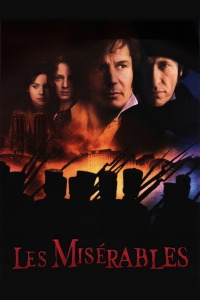
Review of Les Misérables (1998) by Harry W — 10 Mar 2014
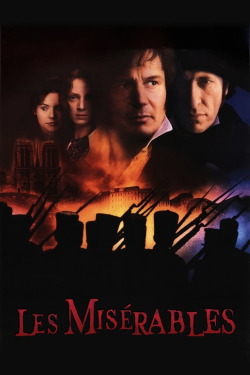
As I was thoroughly displeased with the 2012 version of Les Miserables since it revealed nothing about the story and was more focused on being an epic spectacle where the characters would not stop singing for a second, I had better hopes for this version of Les Miserables, and the fact that it is lead by Liam Neeson is more than enough to have me watching it.
The visual style of Bille August's adaptation of Les Miserables is excellent, and unlike the 2012 film version it never becomes an overblown spectacle which ignores the importance in the story or the real drama that it holds. Billie August manages to give the film exceptional direction to ensure that it stays true to the classic 1862 novel of the same name.
Les Miserables succeeds in two areas. For one thing, the dramatic strength of its story never fails. The true essence of Les Miserables is maintained in Billie August's adaptation of the text because he stays true to the heart of the novel and paces it as it is written. He really brings the source text to life without glamourizing it with excessive visual qualities, and even though the story may not be as consistently interesting to some as it is to others, it still is dramatized perfectly for the sake of the film in Les Miserables. Billie August delivers his most dramatically effective direction since his Academy Award winning film from 1987 entitled Pelle Erobreren (Pelle the Conqueror).
The other quality of the film which rides a lot of benefit from Billie August is the visual quality of Les Miserables. While it is not overblown, Les Miserables features a flawless production design and impeccably scenery which bring the story to life and make its realism exceedingly effective. The colour of everything always has a touch of grey to it without making the film too visually dark, but instead shows several shades of grey to symbolise the nature of the time the film is set in and emphasise the darkness of it. And to enhance the atmospheric experience, the cinematography captures every inch of the experience and provides a lot of memorable imagery. The intensity of the musical score also manages to assist in ensuring that the experience is a powerful one which hits the perfect level of dramatisation. Overall, Les Miserables is visually spectacular and combines the drama of the story with the style that Billie August applies to it, managing to create a film which entertains most of the time even as it runs through some of the less effective dynamics of the story and the 134 minute running time.
And every inch of the cast in Les Miserables manage to do their part without skipping a beat of success.
Liam Neeson's lead performance as Jean Valjean is one of his best as a dramatic actor. While perhaps it is not as powerful as Hugh Jackman was in Tom Hooper's version, Liam Neeson keeps every dramatic aspect of the iconic character well in tact from start to finish. His performance is like a theatrical one which has transferred to cinema without any problem, and it does not surprise me at all. His performance restrains itself from becoming melodramatic and he constantly stays within the appropriate dramatic edge of the film. Liam Neeson almost proves that he was born to play Jean Valjean in Les Miserables, and is a more than exceptional lead.
Geoffrey Rush does the same thing in his role as Javert by setting up an intense ferocity which he puts into the character, so that when he and Liam Neeson battle wits there is no man with a higher ground. Geoffrey Rush's dominating and fierce performance is intimidating and tenaciously effective and gripping the drama of the story. He has no limits as an actor and proves that by giving an excellent performance in the role of a character from a classical text adaptation. He once again reminds Australians everywhere that he is one of our greatest actors of all time.
Uma Thurman's performance is arguably one of the finest of her career. While Uma Thurman may not have a career as high-profile today as she has in the 1990's after her Academy Award nominated success with Pulp Fiction, in the 1990's she was a real hit. And in Les Miserables it is easy to see why, because her unflinching dramatic performance is one of her most dedicated. While her screentime in Les Miserables is small, she manages to make a serious impact by using a combination of emotional line delivery and tense facial gestures which truly emit a lot of genuine sadness from within them. Uma Thurman proves herself to be an actress worthy of Broadway thanks to her dedicated effort in Les Miserables, and any fan of hers can not miss her performance in Les Miserables for anything.
Claire Danes' performance as Cosette is one of the greatest of her career and her best since her performance as Juliet Capulet in Romeo + Juliet in Les Miserables. By engaging directly with the drama of the story from the second she enters the screen to the second she exits it, she refuses to restrain herself and manages to reveal the endeavor of her talents as an actress. Her small but pivotal role is a memorable one and boosts the success of Les Miserables even further.
Hans Matheson manages to give in a fine effort as well and share a strong chemistry with Claire Danes.
All the actors manage to find themselves working with a fiercely intelligent script which never betrays the original novel Les Miserables and manages to bring out the best in them.
So while Les Miserables doesn't exactly contain my idea of an ideal story and is a long feature, it is a prime example of one of the best adaptations of the text available to viewers by riding some incredible Academy Award-nomination worthy direction from Billie August and the passion of a dedicated cast in a fine collaborative effort.
This review of Les Misérables (1998) was written by Harry W on 10 Mar 2014.
Les Misérables has generally received positive reviews.
Was this review helpful?