Review of Lawrence of Arabia (1962) by A.j. S — 08 Sep 2010
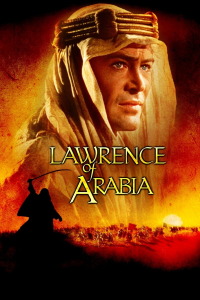
Seen as the primary swords and sandals epic, David Leanâ??s â??Lawrence of Arabiaâ?? is everything and more of what praise it has garnered in the nearly fifty years since its release. There are plenty of swords to be had in the several rousing battle scenes that take place on the insurmountable and picturesque sands for which sandals come in handy. The warriors and friends, when not traversing the desperate landscape, have politics to discuss, and this is what protagonist T.E. Lawrence despises most but fights in the name of throughout â?? however reluctant he feels about it by filmâ??s end. Even at almost four hours it feels less than half that due to a well-rounded production made possible by all involved.
Lawrence â?? played eccentrically wonderful by newcomer Peter Oâ??Toole â?? fights for a cause he begins to feel in his bones when helping the Arabs against the Turks in early-20th century British imperialism; he is a caring man; a humanist in the largest sense of the term; one who has an unmatched sense of pride and ego; he contradicts himself continuously. In short, Lawrence is one of the most complicated and fascinating characters to ever grace a film screen. His inner demons need not be expressed for they are in O'Toole's eyes and in his supreme performance. The audience does not feel so much for the man as they do with his trials and tribulations, internal and external, which ultimately come to define him.
Oâ??Toole is supported by a more than competent supporting cast, not the least of them being Omar Sharif and middle-eastern clad â?? dyed eyebrows and all â?? Alec Guinness; both represent, respectively, true friendship and enigmatic enemy. These men, and many more (there are no women in the duration), influence Lawrence on his journey in their charity and in their betrayals. Perhaps the most emotionally intense scene comes in two-parts where Lawrence returns to the barren desert to save a man, an apparent suicide mission, only to kill him later on to avoid an inter-party civil war. His descent is made complete when he looks at his blood ridden dagger in horror, that same dagger he looked at with pride when first receiving it.
Director Lean spends an ample amount of time focusing on these troubling scenes involving Lawrence, but he balances these with the even more personal desert travels that account for much of the first half. It would be fair to say that more than twenty minutes of the film is spent watching Lawrence and whoever is with him cross the dry, vast desert in silence â?? accompanied by Maurice Jarreâ??s sweeping score. One can hardly imagine the enormous crew managing the heavy film equipment when seeing the actors, in character, suffer on camera while furthering the plot; the heat can be felt projecting off the screen. Much of this effect is made possible by Freddie Youngâ??s gorgeous cinematography and Anne V. Coates' considerate editing.
â??Lawrence of Arabiaâ?? is an experience, to say the least, which is in thanks to great storytelling and the competent management of a grand-scale production from every aspect. Presenting one of the most entertaining personalities ever written, the viewer easily follows an epic character study hardly contained in four hours. Those supporting him are equally enticing in their aiding of his motives from ascent to initial downfall. Making collaboration all the more reverent, Leanâ??s film shows a singular vision that is fully realized, with the immense help of others, does not need providence to be accomplished; for â??nothing is written,â?? it is willed. Due to this effort, that is apparent in every shot, this is a stunning and compelling accomplishment.
This review of Lawrence of Arabia (1962) was written by A.j. S on 08 Sep 2010.
Lawrence of Arabia has generally received very positive reviews.
Was this review helpful?