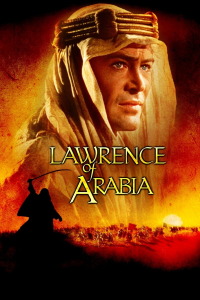
Review of Lawrence of Arabia (1962) by Luc A — 02 Dec 2012
Peter O'Toole plays the tormented, ever so slight effeminate Lawrence well. Omar Sherif is convincing is his role as Lawrence's loyal companion, Sherif Ali ibn el Kharish. The same can be said of the suave Alec Guinness as Prince Faisal. But Anthony Quinn is the true revelation of the movie as Auda abu Tayi. He plays his role so convincingly that even the great David Lean himself was fooled into considering him a native.
But the focus of the film remains the enigmatic figure of Lawrence. As William Bayer rightly points out, "Throughout the picture one has a sense of a man discovering his own unique dimensions. Lawrence always knew he was different, but in Arabia, he discovered his proportions were heroic." This voyage of self-discovery is fraught with risk; no benign tale of self-improvement in exotic locales here... In the words of Friedrich Nietzsche, "... if you gaze into the abyss, the abyss gazes also into you.".
To the film's great credit, it remains steely-eyed in the face of horror: the sadism that Lawrence is a victim of at Daraa, the slaughter of the villagers at Tafas and the "No Prisoners" bloodbath that follows as retribution for these crimes. If the film is to be judged by the conventional standards of hagiography, it has failed.
In this way, the film faithfully reflects Lawrence's "novel traveling under the cover of autobiography" to cite Hill's reference to 'The Seven Pillars of Wisdom'.
This is how Lawrence describes the massacre that he participated in: "The Arabs were fighting like devils, the sweat blurring their eyes, dust parching their throats; while the flame of cruelty and revenge which was burning in their bodies so twisted them, that their hands could hardly shoot. By my order we took no prisoners, for the only time in our war. At last we left this stern section behind, and pursued the faster two. They were in panic; and by sunset we had destroyed all but the smallest pieces of them, gaining as and by what they lost. Parties of peasants flowed in on our advance. At first there were five or six to a weapon: then one would win a bayonet, another a sword, a third a pistol. An hour later those who had been on foot would be on donkeys. Afterwards every man had a rifle, and a captured horse. By nightfall the horses were laden, and the rich plain was scattered over with dead men and animals. In a madness born of the horror of Tafas we killed and killed, even blowing in the heads of the fallen and of the animals; as though their death and running blood could slake our agony. Just one group of Arabs, who had not heard our news, took prisoner the last two hundred men of the central section. Their respite was short. I had gone up to learn why it was, not unwilling that this remnant be let live as witnesses of Tallal's price; but a man on the ground behind them screamed something to the Arabs, who with pale faces led me across to see. It was one of us--his thigh shattered. The blood had rushed out over the red soil, and left him dying; but even so he had not been spared. In the fashion of to-day's battle he had been further tormented by bayonets hammered through his shoulder and other leg into the ground, pinning him out like a collected insect. He was fully conscious. When we said, Hassan, who did it?' he drooped his eyes towards the prisoners, huddling together so hopelessly broken. They said nothing in the moments before we opened fire. At last their heap ceased moving; and Hassan was dead; and we mounted again and rode home slowly (home was my carpet three or four hours from us at Sheikh Saad) in the gloom, which felt so chill now that the sun had gone down.".
In a genuine quest for authenticity, amongst the glamorous desertscapes and camel charges led by the great man in flowing white robes, the film also manages to depict the appalling helplessness of the oppressors-turned-victims facing the merciless cruelty of "our man, Lawrence" and his allies. Most unusually, this big budget spectacle horrifies as well as captivates, enthrals and ...yes...uplifts its audiences.
This review of Lawrence of Arabia (1962) was written by Luc A on 02 Dec 2012.
Lawrence of Arabia has generally received very positive reviews.
Was this review helpful?