Review of Lassie Come Home (1943) by Calvin C — 18 Jun 2013
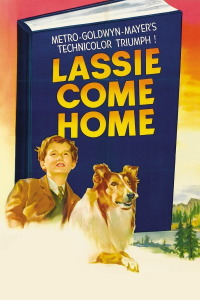
One of the most beloved dogs in film history appears for the first time in this well-known film.
Lassie Come Home tells the story of a boy named Joe Carraclough (Roddy McDowall) who has a close bond with his dog Lassie. He lives with his parents (Daniel Crisp and Elsa Lanchester, yes, the bride of Frankenstein herself) in Yorkshire around the time of WWI. When the parents can't afford Lassie anymore, they sell Lassie to the Duke of Rudling (Nigel Bruce), who is very fond of dogs, and has a granddaughter (Elizabeth Taylor) who promises to care for her. After taking Lassie to Scotland, Lassie, still missing her old home, runs away and takes a long and difficult journey to find her way back home.
Also in the film, Edmund Gwenn, best known for playing Santa Claus in the original Miracle on 34th Street, plays Rowlie, a handyman who helps Lassie along the way, while Dame May Whitty and Ben Webster play farmers who also take a liking to Lassie during her journey.
Generally, I am a sucker to dog movies, and Lassie Come Home is one of them. The dog, Lassie, is a well-trained dog and probably has the best acting in the entire film, which is weird cause Lassie was played by a male dog, due to female dogs shedding in heat. But they disguised the gender well to make the dog acting believable, and they pulled it off well.
The other casting is great as well. Roddy McDowall, while a little melodramatic at times, such as whining over losing Lassie, is pretty good as the boy, fresh off from playing the kid in How Green Was My Valley (if you haven't seen that yet, then get on it right away). The parents, played by Donald Crisp and Elsa Lanchester, well also well-cast and the scenes with Crisp and McDowall were pretty moving, which helps a lot cause they also were a father/son team in How Green Was My Valley. Elizabeth Taylor, while having a small role, is really strong here, especially considering this was her second film, and Edmund Gwenn was a nice surprise as well.
Filmed in Technicolor, Lassie Comes Homes uses the color at some of its strongest, especially in the journey scenes, even though some of them get boring. The score moves us through, and when the film gets emotional, so does the score.
Some of the situations Lassie gets into bored me a bit, but these scenes are brief and I was still rooting for the dog to return home.
In the end, Lassie Comes Home is a wonderful doggie film, with a well-trained dog, a mostly moving story for the whole family, and some pretty good Technicolor. Recommended.
This review of Lassie Come Home (1943) was written by Calvin C on 18 Jun 2013.
Lassie Come Home has generally received positive reviews.
Was this review helpful?