Review of La Promesse (1996) by Kivernitis I — 05 Apr 2008
In the nineties, Belgium gave us two or rather three great directors: Jaco Van Dormael (the terrific "Toto the hero" 1991) and the Dardenne brothers. But the cinema of the latter is more realist and matter-of-fact. Furthermore, it evokes Ken Loach's with a difference: if Ken Loach presents the pains of Western society by introducing humor, it isn't the same thing with the Dardenne brothers where humor is absent.
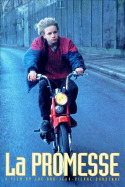
For "the promise", the Dardenne brothers opted for neutrality and sobriety: short and quick dialogs, a film that essentially relies on the characters' gestures and countenances, no music, a vivid and rough directing that often shows the actors with back turned and especially a will to show a bleak social reality (the migrant workers' exploitation) and for this the movie almost takes a documentary aspect. The authors don't pass judgment, they don't feel pity. They just take a gritty and harsh look on these emigrants who live in dilapidated flats with a starvation wage. Besides, we can take down a significant detail: their hard living conditions echoes to a gray sky and it gives to the film a dull atmosphere.
An important point of the film is the relationship between Igor and his father. The beginning of the film presents a relationship between a father and his son that we could describe as complicity. At this moment, the movie becomes tinged with tenderness. But throughout the movie, this complicity gradually turns into an open opposition and the consequences of Igor's promise open his eyes on his fathers' cruelty.
"The promise" is also a movie that includes powerful moments because the suggested has the edge on the showed: Hammidou's mortal accident, the very last sequence of the movie when Igor decides to reveal the truth to Assita about her husband (we don't see her face but the simple view of her bent back makes us suggest her sadness.
The performance is also remarkable. Beginning with Jérémie Régnier who brings a lot of freshness to his character and the authors gave him the picture of a friendly boy. It is interesting to notice that he and "Rosetta" (1999) have a few common points. For example, they evolute in a tough environment. Moreover, Olivier Gourmet's awesome performance in the role of the father adds to the success of the film.
"The promise" shows the Dardenne's brothers' talent who are the main leaders of Belgian cinema.
This review of La Promesse (1996) was written by Kivernitis I on 05 Apr 2008.
La Promesse has generally received positive reviews.
Was this review helpful?