Review of La Dolce Vita (1960) by Nate W — 31 May 2012
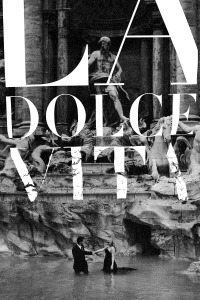
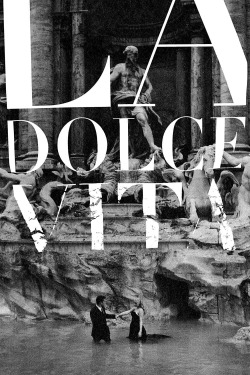
Traditional morality has given way to godless decadence in Federico Fellini's groundbreaking "La Dolce Vita", his first major art film which liberated him from the conventions of neo-realism and allowed him to indulge in the fiercely stylish aesthetic that would come to define his career.
By juxtaposing symbols of Christianity against the "cafe society" which Rome built upon economic prosperity following WWII, Fellini delivers a thesis on the shameless amorality of modern civilization, which is more concerned with materialism and vicarious cheap thrills than a more spiritually fulfilling existence. The opening image in particular - a statue of Christ being flown over Rome by helicopter, seemingly blessing the city before we encounter bikini-clad women flirting with one of the helicopter passengers from their rooftop tanning perch - enforces this theme rather pointedly. Several such images and situations are explored in an episodic narrative which follows a journalist (terrifically played by Marcello Mastroiammi) on a Dantesque pilgrimage through society's downward spiral into sin, ending with a virtual leviathan at the gates of Hell (represented by stingray washed up on the beach).
Ironically, the film encouraged the very cultural cliches it condemned, further popularizing the appeal of the glitzy European high life with its uber-chic sets and costumes (all designed by Peiro Gherardi). At the same time, it also inspired absurdist trailblazers like Luis Bunuel and Jean-Luc Godard, so I suppose you have to take the good with the bad.
This review of La Dolce Vita (1960) was written by Nate W on 31 May 2012.
La Dolce Vita has generally received very positive reviews.
Was this review helpful?