Review of La Cage aux Folles (1978) by Philip C — 21 Dec 2010
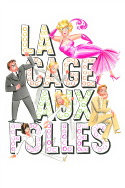
âLa Cage Aux Follesâ? (or âBirds of a Featherâ? in English) is a 1978 French film about two gay men who have to pretend to be straight when their son returns home and announces that heâ(TM)s getting married. The reason that they have to pretend to not be gay is because the girl that their son is marrying is the daughter of two very conservative political parents and in order for their marriage to be allowed the two men canâ(TM)t be âtogetherâ?. Their world is turned inside out as they try to prepare for a dinner where theyâ(TM)ll âmeet the parentsâ? for the very first time.
The set-up of dysfunctional families coming together which cause all sort of comical chaos have been done many times before over the years by Hollywood and its lack of genuine ideas, so the fact that it was made by the French makes it that much more fresh. Many American films have tried to go for the âMeet The Parentsâ? formula and yet almost all of them have failed (except for well of course Meet The Parents, Meet the Fockers and what will eventually be Little Fockers, even though that looks pretty bad itâ(TM)ll make lots of money). And why is it that American films have run the gamut in terms of creativity? Well your guess is as good as mine; perhaps itâ(TM)s the jokes in the films or the wrong actors for the given part, but what this film does like so many American films fail to do is âembrace its gay-sideâ?. Now Iâ(TM)ve never seen the American remake of the film entitled âThe Birdcageâ? from 1996 (Robin Williams, Nathan Lane, Gene Hackman, Diane Wiest) but the cast makes me want to go out and rent it right away. Having not seen the remake I canâ(TM)t compare the two but what I believe that the original does so well is âembrace its gay-sideâ?. In Europe, violence is regarded far higher than sexuality in regards to what is offensive and what isnâ(TM)t (compared to the exact opposite in North America) and this relative leniency is what I liked best about the film. The film has this atmosphere that many American films with âgay jokesâ? or gay people donâ(TM)t have. The words âgayâ? and âfaggotâ? are tossed around quite liberally in this film and that whole looser atmosphere makes the film that much more enjoyable. A person would call another person âa faggotâ? in a sweetly endearing fashion and this way it made it that much easier to laugh in the film. Iâ(TM)ve lost count how many times Iâ(TM)ve heard words like this used in films where the viewer was supposed to laugh but it felt much too awkward to do so because in context of the atmosphere it was deemed as offensive or hurtful. What the film does so well is take the negative stigma of homosexuality and throws it out the window, the film knows its gay and isnâ(TM)t taboo about it as many North American films so often are.
Thereâ(TM)s no caution tape here to make sure nobody crosses the line by becoming offensive. All of the gay words or gestures used in the film arenâ(TM)t done to offend people but to just demonstrate how certain people are. I think people tend to take the whole âgay thingâ? way too far. Iâ(TM)m Christian and my belief is that God made a man and a woman to be together and not two men together or two women together. Personally I think that itâ(TM)s wrong when a man and another man are âtogetherâ?, but with that being said Iâ(TM)m not about to gay-bash anyone. What their sexual orientation is is entirely their business and their business alone. Do I think itâ(TM)s right for a person to be gay? No, but at the same time one of my best friends is openly gay and Iâ(TM)m fine with that. Heck, even Brokeback Mountain fits into this whole discussion. Was it nearly as bad as I thought it was going to be? Not by a long shot. In fact I actually really enjoyed it for the film that it was and the powerful love story that it told. People made such a big deal out of it and hyped it up so much in a negative way that when I finally saw it I didnâ(TM)t know what the big deal was all about. People will do anything to stir up controversy I suppose.
The film also feels âlooserâ? in the sense of the way that itâ(TM)s put together. Another strong point in the film is the use of the camera work. Often-times the camera lingers in a âEuropean Art-houseâ? kind of way which is quite distinct. An editorâ(TM)s job is to edit a film and have it flow together in seamless fashion, but sometimes whatâ(TM)s captured on camera doesnâ(TM)t always translate on screen. The audience can be taken out of the film by knowing it was âeditedâ?. An editorâ(TM)s job is to make it look as if they were never there in the first place or at least thatâ(TM)s the job of a good one. The transitions and editing here feel polished and smooth and with the exception of one single shot I forgot that the film was edited at all. I donâ(TM)t exactly remember which shot it was exactly, but there was one moment where one of the characters is talking and then it suddenly cuts off right away to the next shot, all the while feeling much too jerky. It seemed like they had a whole whack more to say but got cut off, not by another character but by the camera itself.
Another great part of the film is the cast. The film is rife with many famous French actors playing their roles: Ugo Tognazzi, Michel Serrault, Claire Maurier, Benny Luke, Michel Galabru and Luisa Maneri just to name the most prominent forces. All of the actors are great in their roles but it was Serrault as Albin who stole the show for me. He was the most âblatantly gayâ? character of the whole film. Again, I donâ(TM)t think that being gay is ârightâ?, but seeing people play gay characters is a whole lot of fun to watch. Gay people are just like everyone else except their sexual orientation. And what Iâ(TM)ve notice is that they seem to be people who really do âliveâ? and are constantly in good moods with always being a helping caring hand to those in need (as should everybody). Now whether or not Serrault is actually gay in real life, that doesnâ(TM)t affect his performance because heâ(TM)s completely believable in the role either way. His performance here feels very similar to Eric Stonestreet from Modern Family. Stonestreet plays Cameron whoâ(TM)s an openly gay man on the show. And other than Ty Burrell as Phil, Cameron is my favourite character. And as difficult as it is to believe, Stonestreet is a completely straight man which is such as shock because he plays âgayâ? so well that you almost lose him in the role (in a good way of course) just as much as Serrault loses himself in Cage Aux Folles. Interesting little piece of information: Nathan Lane who takes on the gay role of Serrault in the remake also plays a gay man in a guest appearance on an episode of Modern Family with Stonestreetâ(TM)s Cameron.
Another thing that I liked about the film was that it felt very similar to another French film entitled âDiner du Conesâ? (which has also been remade in the US called âDinner for Schmucksâ?). The film was full of awkward moments at dinner where there was a whole lot of set-up with quite a few loveably dumb characters who make stupid choices that make the audience laugh through uncomfortable awkwardness. One minor point of caution with that though, is there comes a point when filming solely awkwardness can become dangerous territory. I know some people who donâ(TM)t consider âawkward momentsâ? in films as âreal comedyâ? and that they need more clever humour and set-ups to work to be âfunnyâ?. While I do agree to a certain degree that a comedy canâ(TM)t just thrive off awkwardness on its own, it doesnâ(TM)t need to be a variety of different things either. The awkwardness of the characters and the situations that they find themselves in are the driving force of the film and in this filmâ(TM)s case that is completely fine with me.
One of the things though that really did bother me was the last ten minutes or so of the film. So the first two acts are the initial set-up of the characters and them preparing to meet the parents of their prospective daughter in law. The third act is the actual meeting of the two groups which is great because here is where the climax of the film is. The two camps meet and all sorts of hilarious and awkward jokes ensue as the gay men try their very best to keep their ruse afoot. Then theyâ(TM)re discovered and within about all of three minutes the film ends and thatâ(TM)s it. Um, sorry could you please rewind it? I think I blinked and missed the ending. No? I saw the whole thing? When Simone returns home to be Laurentâ(TM)s mother and everyone finds out that Albin is really a man, I felt that he was discovered too quickly. I was hoping that Simone would return and then Renato would try his best to keep the game going for as long as he could like trying to convince everyone that Simone was really Laurentâ(TM)s long-lost aunt or something to that effect. There was so much potential with this last scene where the possibilities for awkward jokes and more cross-dressing could have had a much better pay-off. More bang for their buck would have worked in this instance. Andreaâ(TM)s father finds out that Laurentâ(TM)s parents are two gay men, heâ(TM)s in disbelief for all of five minutes and then after a quick and sudden escape thereâ(TM)s the wedding and then itâ(TM)s all over.
Despite the one choppy and messed up shot and the disappointing waste of potential in the last act of the film, La Cage Aux Folles is a genuinely intelligent and hilarious comedy that not only works because of the greatly talented actors within the cast, but more importantly the looseness of the gay stigma that so many American films seem to have failed to grasped. Folles succeeds where many films have completely failed because they take the gay taboo by the horns and throw it out the window by fully âembracing its-gay sideâ?.
This review of La Cage aux Folles (1978) was written by Philip C on 21 Dec 2010.
La Cage aux Folles has generally received positive reviews.
Was this review helpful?