Review of Kundun (1997) by Thomas M — 22 Jan 2010
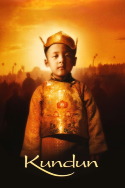
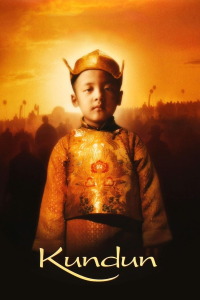
Kundun is one of Scorsese's finest pictures. I cannot believe that the critics hated this film. It won't be appreciated until well after he's dead, but that's natural when you're dealing with artists of his ability.
With Kundun Scorsese transcends his documentary approach to film and instead relies purely on ethereal imagery and sound. Liquid images, sparse dialogue and a narrative structure (memory and recollections) that justifies it, Kundun is the perfect marriage of cinematic form and content.
Kundun?s camera is free. It's about the ethereal qualities of cinema. Fleeting moments and partial recollections, memories of sound and touch stitched together and framed as a child's waking dream. The film reaches its apotheosis during a 9 minute sequence toward the end where the Lama travels to India by horse. It's the most affecting ten minutes in the film.
Scorsese has never been a visual storyteller. He uses violence, kinetic edits and explosive actors as a crutch. This is not a criticism; it's just his natural style. But what's great about Kundun is that allows us to watch Scorsese step out of his comfort zone.
Ever since his early student films, Scorsese has been obsessed with recreating and repackaging reality as film. His stories were filmed documentaries, his Italian camera tied firmly to his characters (Travis, Jesus, Lamotta, etc), the story fleshed out by focusing on the defining moments of the person's life. To drive the story forward, he uses the threat of violence. To end the story altogether, he calls down scenes of carnage. As his style of storytelling is such that he can follow his characters around indefinitely, his tales require some form of external destruction to bring the story to an abrupt close.
Of course Kundun again plays to Scorsese's documentary sensibilities. It is a story about the Dalai Lama a filmed recreation of his life. But in every aspect, Kundun transcends the old Scorsese. Instead of method actors desperately pretending to be real, we have real human beings who are not trained as actors. Instead of rock-and-roll songs driving the story forward, we have ethereal, ever-present music acting as a tapestry upon which the images are played. And instead of violence propelling the story, we have a hero morally opposed to violence.
Scorsese's film also acts as a meditation on his earlier pictures. While "Taxi Driver", "Goodfellas" and "Casino" portray worlds completely devoid of spiritual values, Kundun implores us to meditate on such values. In Travis Bickle's explosions of sociopathic rage and Henry Hill's drug-induced paranoia, we witness the mirror perversions of the Dalai Lama's spiritual transcendence.
Kundun is Scorsese taking his particular brand of film-making to its logical conclusion.
10/10 - Critics seemed to hate Kundun because they believed it to be too passive. American cinema is largely a cinema of action. A film like Kundun, where inaction is action, rubbed them the wrong way. But make no mistake, "Kundun" is great cinema. Watch Taxi Driver and Kundun back to back to appreciate both Old and New Scorsese perfected.
Worth watching many times.
This review of Kundun (1997) was written by Thomas M on 22 Jan 2010.
Kundun has generally received positive reviews.
Was this review helpful?