Review of Kubo and the Two Strings (2016) by Trevorsview — 13 Dec 2016
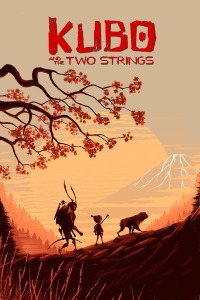
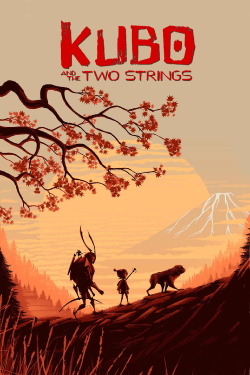
Travis Knight takes the director’s chair under the same studio that created other stop-motion spectacles such as Coraline, ParaNorman, and The Boxtrolls. Except this one stands out far greater than the others, as Kubo and the Two Strings uses a classical story to make a tribute to the art of storytelling, in the form of Japanese clay puppets and the old forgotten art of origami.
Never before has a story about a one-eyed lonely boy feeding his spiritually lost mother felt so captivating for a contemporary audience. This little restless wanderer takes his journey toward self-worth to a much greater level, as he treats us to a story told within a story with his origami figures, the strings of these puppets controlled by the strings of his musical instrument. Just one sound of the strum, and the paper folds itself to tell of a Moon King who takes a samurai and his family. But young Kubo is not satisfied with his life, as he longs to find his lost father, who he’s been told was once a mighty warrior.
All other strides taken by the animators to generate this moving picture are worth the attention of all worldwide art academies. These artists know how to fluidly combine the techniques of stop-motion animation and computer generated imagery in a way that services the artistry rather than the technicality. I am now officially won over upon the concept of combining CGI with Claymation, as everything in the frame of this feature flows and blends together seamlessly, making it impossible to tell what is CGI and what is practical. Kubo is a remarkable feat for 3D viewing.
The moments of spectacle in the near-two-hour run time include a moonlit ocean wave split in half, a big scary skeleton with glowing eyes, a large underwater sea creature with a circular mouth, a swordfight with a monster from the afterlife, and two frightening looking ladies who appear merged from V for Vendetta and the twins from The Shining.
.
With such a love toward the history of storytelling, it’s a shame that the story itself needed some fine tuning here and there, particularly in the second act.
After some serious drama, Kubo winds up in some other world coated in snow, a monkey there to greet him. Here is where Kubo begins to feel tonally different from how it was marketed.
The next hour contains an excess of humor that for the most part falls flat. The conflict is there between the boy and the authoritative monkey, but by jokes that suggest a genre not previously established. To make it worse, Kubo and the monkey later meet with a beetle who has no memory of his past life. Almost all of his dialogue contains jokes that would get on anybody’s nerves like the class clown you had in fourth grade. The voices of these two mentors to the boy are voiced by Charlize Theron and Matthew McConaughey, neither of which are that terribly fitting with their parts. But Theron does actually have her moment as she gets to tell a story to Kubo in the classical warm tone as told through memory. I’d also like to add that there is a plot twist involving these two figures, but it’s one of those twists you could have easily guessed.
This film’s theme supports the belief of Buddhism, which includes reincarnation and praying to ancestors. If you, like me, are of a Christian or other religious belief, it might be offensive to you. But on the plus side, strong bonds in the feature are made between mother and son, offering children an important moral on the importance of storytelling from generation to generation.
I always enjoy a good stop-motion film now and then; it’s such a shame there isn’t nearly enough of them being made nowadays. I think innovative forms of animation such as this one add significantly more meaning and artistry to storytelling, much more impactful than the computer animation we’ve gotten way too used to. Now look, I still enjoy CGI as much as the next guy, but I also enjoy a little variety.
This story about stories reveals to us why we go to movies: the stories told reveal our true selves, including which ones appeal to us and which ones we choose to tell. Stories, especially in movie format, live on past our own lives through constant retellings.
This review of Kubo and the Two Strings (2016) was written by Trevorsview on 13 Dec 2016.
Kubo and the Two Strings has generally received very positive reviews.
Was this review helpful?