Review of Kong: Skull Island (2017) by Spangle — 04 Apr 2017
Dear Billy,.
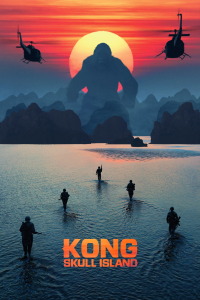
Kong: Skull Island, directed by Jordan Vogt-Roberts, is his chance at a Vietnam War. In his sophomore feature, Vogt-Roberts seems to have some self-recognition that he will never get to direct a Vietnam War film. This is not a shot at him, as he is certainly a promising young director with both this and his debut Kings of Summer standing as solid starts that show he is capable of handling both small intimate films and huge films of epic proportions. While neither are particularly great, they are both capable films nonetheless. In this film, he takes his chance to add as much Vietnam imagery as possible by setting the film in 1973 and also tossing in some Cold War paranoia for good measure in this story of a group of people wandering the jungles on a mission, encountering a remote tribe, and facing a being that the tribe sees as a god. Did Francis Ford Coppola not make this film, sans the big monkey, in 1979?
Wearing this Apocalypse Now influence on its sleeve, Vogt-Roberts shows a love of both gratuitous shots of helicopters flying into the island or of the smell of napalm in the morning when Preston Packard (Samuel L. Jackson) tries to dump napalm on Kong. Yet, as with all Kong films, it must run through the beats of the story. Fortunately, Vogt-Roberts improves upon Peter Jackson's recent rendition. By chopping off an hour, the film is not so dreadfully long, which is really a major benefit. Give me the dinosaurs, but not for too long. Give me some backstory, but not extended scenes in a boat and trying to get funding for the trip. This latest edition streamlines it, yet still has the time to get into very compelling mythology regarding Skull Island and the nature of Kong as well as the other beasts that call Skull Island home. Additionally, some of the more unsavory elements of Jackson's films included its depiction of the natives of Skull Island. Depicting them as horrible savages out to kill white people, Jackson's film indulges in nasty stereotypes that create a truly captivating opening scene in that film, but that hardly justifies the racism. With Skull Island, Vogt-Roberts dispatches of this nastiness and instead has a smart and respected tribe in the center of Skull Island. Playing host to WWII veteran Hank Marlow (John C. Reilly) for 28 years, these are no savages and Vogt-Roberts never pretends they are. Instead, the tribe is given its due respect throughout the film. This latest film also ditches the racist undertones of past Kong films. From the original to various remakes, critics have shown the parallel between King Kong being an ape (as black people have often been derogatorily been referred to as "monkeys") and the white/blonde damsel in distress that he clutches in his hand. To critics, it has been a parallel between the perceived assault on the white race by black America. Now, whether or not you buy that or not, I did once have a film professor who claimed that it was why no studio could have an American direct King Kong again, as that parallel had been made. She was not entirely wrong, even if Vogt-Roberts is American as Brie Larson is never a damsel in distress or screeching in his paw, which Naomi Watts did often in 2005. Instead, he holds her once and it is to save her. By then, she had already established that he was not an enemy and was passed out anyways, so no concerns there from her. Of all of its updates, ditching the possible racist undertones is certainly a major plus, regardless of whether you buy into that angle or not.
However, Vogt-Roberts' influences also come via the heavily 70s soundtrack, references, and the political situation at the time. Fortunately, it does actually have a lot to do with the plot. As the Cold War is burning brightly and the Americans are coming off a loss in Vietnam, the whole country needs a win. This mission to Skull Island is that win. Finding new species' or a new island would re-establish America as the top dog in the world and, as such, is a major effort even if it takes some convincing. Yet, what the film does very well with its 1970s post-Vietnam setting is to show the men trying to regroup and go back to war, even if it is a different kind of war. The men are resistant and constantly thinking home. From writing letters, discussing home, or making references to what they will do once they get there, the men form a common bond of trying to make the best of the situation. Yet, on the flip side men such as Packard or James Conrad (Tom Hiddleston) need this war. Even photographer Mason Weaver (Brie Larson) needs the war, though she is anti-war. The three of them have nothing left to do after the end of the Vietnam War and the Skull Island job represents another opportunity to feel useful in the world at a time when opportunities were scarce.
This review of Kong: Skull Island (2017) was written by Spangle on 04 Apr 2017.
Kong: Skull Island has generally received positive reviews.
Was this review helpful?