Review of King Lear (1983) by Robbie H — 03 Sep 2007
The ruthlessness of Shakepearean title characters such as Macbeth and Richard III help us to more clearly see the folly of their actions and where their tragic flaws become their downfalls. With a man such as King Lear, however, the tragedy is a little less apparent to the casual observer. Hamlet and Macbeth kill their way to glory and defeat, but Lear does not. Certainly, he unfairly ostracizes his virtuous daughter, Cordelia, while falling for the treacherous tricks of his other two daughters, Goneril and Regan, but since his character begins the play with the onset of dementia, how culpable is he for his foolish actions? In addition, Lear begins as a man of power and is then stripped of his kingdom, thus he is not able to rise then fall in the traditional sense. So, many traditional molds are broken with this play, which keeps things both unconventional and interesting.
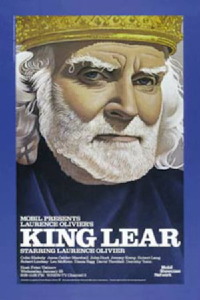
This film version is from 1984 and stars Laurence Olivier as Lear. Olivier is strong but, perhaps ironically, too old to play the part adequately. From time to time, his speeches suffer from mediocrity, and when performing Shakespeare this is tantamount to simply reciting the lines. There are moments when he really attacks the script though, as when holding the young Cordelia (the fresh-faced Anna Calder-Marshall) before they are carried off to prison. John Hurt plays the mentoring Fool in an enthusiastic role that could have benefitted more from variation in line delivery, and Diana Rigg plays the icy Regan with enough harshness to keep pace.
But it's the unknown supporting players that really bring this production to life. Leo McKern, as Lear's blinded peer Gloucester, blusters effortlessly through some of the more demanding scenes. Robert Lindsay is deliciously low-key as Gloucester's conspiring bastard son Edmund, and Colin Blakely is intense and affecting as Lear's outcast advisor Kent. Best of all though, is David Threlfall as Gloucester's outcast, legitimate son Edgar. The character suffers a great deal, and Threlfall's performance matches the agony in perfect time, leading up to the scene when Edgar returns to avenge Edmund's wrongdoing.
Olivier's King Lear is a made-for-TV offering, and as such the production values are far from impressive. There is a phoniness about all of the scenes that makes me cringe just thinking about them. A Stonehenge motif is established but never really explored, and the 'effects' for the famous storm are distracting. The company does manage to elevate the material to a sufficient plateau, but King Lear is my favourite Shakespearean tragedy, and unfortunately this particular version doesn't quite hit the nail on the head.
This review of King Lear (1983) was written by Robbie H on 03 Sep 2007.
King Lear has generally received positive reviews.
Was this review helpful?