Review of Killing Zoe (1993) by Jennifer A — 18 Mar 2006
[size=2]Love him or hate him, Quentin Tarantino made a huge and lasting impact with his first two films, [i]Reservoir Dogs[/i] and [i]Pulp Fiction[/i]. His writing, full of quirky characters and witty dialogue, helped revive the crime genre. His unabashed self promotion (this guy is the ultimate media whore) also helped propel him to a visible star status usually held by actors, not directors. Tarantino also became one of the first Generation X directors to make an impact in the 90's. What kind of lasting impact will Tarantino have? After directing three films, Tarantino took a six year break from directing, returning with [i]Kill Bill 1 & 2[/i]. Although the Kill Bill films were successful with fans and at the box office, I wonder if if Tarantino's homage to Asian martial arts films truly took that long for him to create. I'll examine those two films later, but for now I'll just say that I think Tarantino is at a crucial stage of his development as a director if he wants to be considered among the all time great directors. His first two films [i]Reservoir Dogs [/i]and [i]Pulp Fiction [/i]remain his best work. Will Tarantino be content to remain in the crime/action genre, or will he expand to other genres? While his legion of loyal fans remains strong despite a six year hiatus, would they still follow him if he did a family drama, an epic piece, or a romantic comedy? If he sticks to the crime/action genres, will he ever create a work equal to [i]Pulp Fiction[/i] again?
[b]Reservoir Dogs[/b], released in 1992, marked the debut of then unknown director Quentin Tarantino. Joe Cabot (Lawrence Tierney) organizes a group of career criminals to do a jewelry store heist. Unlike most films in this genre, the emphasis of this film was on the before and after, and the relationships these men have with one another, not the crime itself. Cabot gives the men codenames to protect their identities. We have Mr. White (Harvey Keitel), Mr. Orange (Tim Roth), Mr. Pink (Steve Buscemi), Mr. Blonde (Michael Madesen), Mr. Brown (Quentin Tarantino) and Mr. Blue (Edward Bunker). Cabot's son Nice Guy Eddie (Chris Penn) acts as a liason. In the opening scene the eight men sit at a diner prior to the robbery discussing everything from pop culture, to Madonna, to tipping waitresses. This is a perfect introduction to the characters, and a perfect example of Tarantino's cleverly written dialogue. The film flashes back and forth after this scene. Although we never see the actual robbery, we know it's botched and all the men suspect a rat. Mr. Orange is bleeding to death, and Mr. Pink suspects him, but Mr. White insists Mr. Orange isn't the rat. The sadistic Mr. Blonde just wants someone to pay. This small budget film remains the perfect introduction to Tarantino's work. Although violent and bloddy at times, it's a character and dialogue driven story, and the actors truly seem to be enjoying themselves. Excellent performances all around, with Steve Buscemi shining the most as the paranoid Mr. Pink.
[b]Pulp Fiction[/b], released in 1994, marks Tarantino's crowning acheivement. After the success of his [i]Reservoir Dogs[/i] and [i]True Romance[/i], which he wrote he screenplay for, Tarantino was alloted more money to make this film. Although still a small budget by Hollywood standards, it was large enough to give the film a signficantly slicker look. Tarantino cast John Travolta in the lead role, which was a signficant casting decision since Travolta's career appeared to be on the downside (he had not appeared in a hit movie in years) and the charactar Travolta would play would be against type for him. The other lead went to Samuel L. Jackson, who at that point had been nothing more than a seasoned character actor. The chemistry these two actors had became the heart and soul of the film. Vincent (Travolta) and Jules (Jackson) play hitmen working for Marsellus Wallace (Ving Rhames). When they are not killing people, Vincent and Jules discuss philosphy, pop culture, religion, and just about everything else. [i]Pulp Fiction[/i] also intertwines several other stories, including boxer Butch (Bruce Willis) who is suppose to throw a fight, Tim Roth and Amanda Plummer, who are armed robbers and lovers, and the delightful Uma Thurman as Mia Farrow, the wife of the "Boss". The scenes with Travolta and Thurman absolutely shine, and their dance sequence (a reference to Travolta in Saturday Night Fever perhaps?) is classic! Like it's predecessor, [i]Pulp Fiction [/i]is violent at times, but like [i]Reservoir Dogs [/i]it's the clever dialogue, not the violence, that keeps the movie humming along. The film also features Harvey Keitel, Christopher Walken, Eric Stoltz and Rosanna Arquette. This often imitated film (poorly imitated I might add) remains as fresh and enertaining today as it was upon it's release. A modern classic.
[b]Jackie Brown[/b], released in 1997, marks Tarantino's third venture into the crime genre. It's (very looslely) an ode to blaxploitation films of the 70's. Pam Grier stars as Jackie Brown, a middle-aged flight attendant struggling to get by on a meager salary. To help makes end meet, she works with gun dealer Ordell Robbie (Samuel L. Jackson) smuggling money to and from his bank in Mexico. When the authorites (played by Michael Keaton and Michael Bowen) catch her carrying some of Ordell's money, they attempt to use Jackie to frame Ordell for the murder of one of his associates. Bail bondsman Max Cherry, who has worked with Ordell, bails Jackie out and becomes infatatuated with her. Meanwhile Jackie concocts a plan (using Max) to dupe the authorites and Ordell, so she can walk away with Ordell's half million dollars. The film also stars Robert DeNiro as Ordell's buddy/crime associate and Bridget Fonda as Ordell's girlfriend. Although a decent film, [i]Jackie Brown [/i]is more uneven and less witty than it's predecessors. Although the story is a good one and the Jackie Brown character is extremely well-written, this film for the most part fails in developing a colorful or interesting cast of supporting characters like [i]Reservoir Dogs[/i] and [i]Pulp Fiction[/i] did. Samuel L. Jackson is once again very good, but you can't help but compare Ordell to Jules (in Pulp Fiction) and Ordell's character isn't quite as memorable. It's quite shocking to see Tarantino under utilize DeNiro, but that's exactly what he did. DeNiro's Louis Gara character feels like a throwaway, he's there but isn't given decent dialogue to work with or any truly memorbale scenes. Bridget Fonda is given even less as the stoner girlfriend of Ordell. Aside from Pam Grier, who is delightful in this film, it's Robert Forster who fares the best. His understated performance as the bail bondsman is quite good. Like [i]Pulp Fiction[/i], [i]Jackie Brown [/i]clocks in at around 2 1/2 hours. Unlike [i]Pulp Fiction[/i], [i]Jackie Brown [/i]feels long. Although the payoff in the end makes the film worth watching, the lack of character development for DeNiro, Fonda and Keaton makes me question the need for this length. They should have been better written, or edited at the very least. Not a bad film and I really enjoyed Pam Grier's performance, but it's certainly a letdown after [i]Pulp Fiction[/i].
In [b]From Dusk Till Dawn[/b], Tarantino serves as screenwriter and actor in this action/horror film directed by Robert Rodriguez. Quentin Tarantino and George Clooney star as brothers and armed robbers Seth and Richie Gecko, who are heading to Mexico to escape authorites and live the good life. To cross the border they kidnap preacher Jacob Fuller (Harvey Keitel) and his two children (Juliette Lewis and Ernest Liu) and drive the RV to a Mexican bar called the "Titty Twister" where the encounter blood sucking vampires. A gorefest ensues as the Geckos and Fullers try to escape. The movie starts off promising with the usual quirky characters and clever dialogue, but once they arrive at the bar the film quickly descends into a cartoonish horror flick. It's extremely gory, and while the sequences at the bar are technically well done, the entire story just unravels as the violence, not the characters, become the star. While the film is probably intentionally over-the-top, it just becomes to excessive and self-indulgent. Critics pretty much loathed this film (as did I) but it did find a loyal cult following and spawned two sequels which I have no desire to watch!
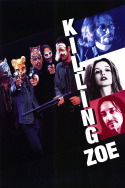
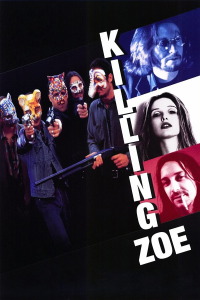
[b]Killing Zoe[/b], written and directed by Roger Avary (who co-wrote Pulp Fiction) is just one example of a slew of films that came out in the wake of [i]Reservoir Dogs[/i] and [i]Pulp Fiction[/i], attempting to cash in on his success. Quinten Tarantino actually served as executive producer for this miserable film. Zed (Eric Stoltz) is an American fresh out of prison who travels to France to be a part of a bank heist where things go terribly wrong. Where [i]Reservoir Dogs[/i] and [i]Pulp Fiction [/i]relied on quirky characters and clever dialogue to drive the often violent stories, [i]Killing Zoe [/i]fails miserably at cleverness or developing interesting characters and instead has to rely on it's many violent scenes. It doesn't work.
[/size].
This review of Killing Zoe (1993) was written by Jennifer A on 18 Mar 2006.
Killing Zoe has generally received positive reviews.
Was this review helpful?