Review of Kill Your Darlings (2013) by Cameron J — 28 Feb 2014
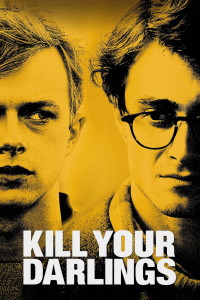
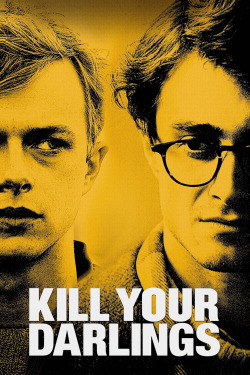
Well, um, that's a pretty delightful title right there, and wouldn't you know it, it was already taken back in 2006, by a film that was Swedish, and therefore peppy enough for a title like "Kill Your Darlings". Not every Swedish rock band can be as upbeat as The Flower Kings, and there are plenty of disturbed people in this world, as you can tell from the fact that this title has been used by more than one filmmaking time... as well as from Lucien Carr... and Daniel Radcliffe. Now, Radcliffe looks so sleazy that he just has to be up to something, and it doesn't help that he's doing super-obscure films so that the public eye will not fall upon him. Wow, he really is bent on scrubbing off that "Harry Potter" image, and Dane DeHaan is apparently trying to scrub off comparisons between him and Leonardo DiCaprio (Well, how can you compare any actor to DiCaprio?), because when I see Radcliffe and DeHaan on the screen together, I'm not so much thinking about "Harry Potter" or Leo DiCaprio (Again, how can you compare?), as much as I'm trying to figure out which one of these guys is paler and greasier. These boys need some serious grooming and some serious sun, because as excellent as they are, an engaging appearance really gets folks attention, although you would think that the nerds would compensate for limited audience reception by jumping at the idea of seeing Harry Potter face off with Harry Osborn. It's quite the clash, and then when you get Richard Harrow of "Boardwalk Empire", Dexter Morgan and Ben Foster in the mix, then it's hard to not expect some high thrills... up until you find out that this film is actually about Beat Generation minds hanging out and having gay affairs and whatnot. Jokes aside, this is actually a pretty tense little melodrama, yet it can't kill off its problems, try as it might, perhaps too hard.
Certainly, ambition for this project is found across the board, particularly within John Krokidas' direction, which is inspired enough to meet ambition pretty effectively more often than not, but has a tendency to get carried away with tonal plays, whose subtlety lapses are few and far between, make no mistake, but sometimes more glaring than they should be in a film that is generally so genuine, and has such a thin layer of defense against a sense of too much romanticism. Telling infamous chapters out of the lives of infamous romantic figures, this film's story isn't your usual under-researched, fact-based opus that can get away with its seemingly over-the-top dramatics, and I don't doubt that this is a pretty accurate interpretation, but it's hard to deny that this subject matter is more melodramatic than most, and that becomes a little too glaring the more this film ambitiously bloats histrionic storytelling, and somewhat lazily undercooks fleshing out its story enough for you to fully buy into it. Quite frankly, the believability of this melodrama isn't the only thing that suffers from developmental shortcomings, for although characterization is rich, perhaps even well-rounded in most areas, in far too many areas, depth is limited in this should-be layered character study, whose performances and storytelling highlights are strong enough to sell much of the dynamicity within this drama, but cannot fully compensate for expository limitations. There's something somewhere in this film that is distinctly missing, and it limits depths that could have been truly wealthy in this film, and still could have been through all of the aspects that feel brushed over if it wasn't for pacing's being about as inconsistent as it is, in some places, rushed. There is plenty of meat on this drama's bones, and when realized focus falls upon it, highlights kick in, ranging from strong to, well, maybe even outstanding, but those highlights feel relatively limited due to the film's being primarily driven by, not so much filler, but excess, which shakes a sense of momentum and leaves storytelling to slip into a sense of aimlessness, something that this film cannot afford to have if it wishes to stand out. Make no mistake, this film clearly wants to stand out, and I'm betting that it would have if the inspiration was more consistent, or at least not so challenged by subtlety issues and pacing incoherencies that thin focus, until the film finds itself sputtering a fair ways short of its ambition and potential. Seeing what could have been, I really do wish that the final product matched certain individual strengths on the whole, and yet, those glimpses of a stronger drama are seen through enough inspiration to make a still pretty rewarding drama, driven by sharp substance, and polished by style which is just as sharp.
At the very least an inspired portrait of the 1940s, this film's classic pop and jazz unoriginal soundtrack is a little bit predictable in its musical selections, but, outside of absolutely randomly anachronistic indie rock pieces (Seriously, what?), just about every tune that goes shamelessly flaunted in this period piece a worthy one that not only charms and entertains by its own right, but helps in selling a distinctive era that is most consistently distinguished by art director Alexios Chrysikos joins forces with production designer Stephen H. Carter and costume designer Christopher Peterson in setting up visuals that prove to be intricately well-realized and distinctly prominent, and look good while doing so. As successful as this film is in reviving the 1940s, it is also quite the testament to modern filmmaking artistry, with cinematographer Reed Morano polishing the aforementioned handsome visuals with impeccably handsome bleakness to coloration, flavored up by hauntingly warm lighting, while Nico Muhly turns in an original score that, while not especially unique, is refreshing and dynamic in its playing with anything from '40s jazz themes to cleverly experimental minimalist compositions whose soft intensity may be a little too soft to stand out tremendously, but certainly adds to the final product's aesthetic value and substance. In terms of substance, the film hits plenty of bumps, but when it comes to style, I am pleasantly surprised to see just how consistently this film delivers as a well-designed, visually handsome and musically tasteful portrait of romantic subject matter, which is betrayed in plenty of areas of storytelling, yet not to the point of obscuring potential. Before it can be the arguably outstanding drama that it could have been, this film must first back itself with a promising idea, and sure enough, while the execution is either undercooked or overblown, this fact-based story concept, through all of its questionably melodramatic traits, is nothing short of intriguing in its extensive analysis on the romantic brilliance and flawed humanity of young and troubled Beat Generation icons, which is more complimented than betrayed by its storytelling. While unevenly paced and ultimately overblown in a couple of areas, John Krokidas' and Austin Bunn's is not simply strong, but one of the stronger scripts of 2013, with razor-sharp dialogue and slickly tight set pieces that reflect a romanticism which drive much of this dramatic study on romantics, who are most brought to life by thoughtful highlights in often undercooked characterization that help in crafting a juicy and thoroughly intriguing interpretation of worthy subject matter which can't quite make the final product itself all that strong, due to overambitious missteps to Krokidas' directorial storytelling, which, to tell you the truth, still isn't too shabby, sustaining a reasonably bit of entertainment value with plays, not only on the aforementioned visual and musical styles, but on snappy editing and nifty visuals, punctuated by more atmospherically thoughtful attributes that establish tense, if not resonant dramatic highlights. The offscreen performances are flawed, but their highlights are very much worth waiting for, firmly securing the final product as rewarding, maybe even borderline strong, yet still not having nearly as much consistency as the onscreen talent, which I was expecting to be strong, but not on this level, with Jack Huston being effectively layered as Jack Kerouac, and the unevenly used Michael C. Hall stealing the show in his smooth, yet humanly layered portrayal of a homosexual who doesn't truly realize how obsessive his true feelings are until he is rejected, while leads Daniel Radcliff and Dane DeHaan share flawless chemistry and individually prove to be, not simply worthy or revelatory, but among the best performances of 2013, with both charismatically immersing themselves in their distinct roles, - whether it be Radcliff's nervous, but ambitious young Allen Ginsberg, or DeHaan's genius, but eccentric Lucien Carr - layered by a powerful emotional range that exposes the human flaws and vulnerability within the brilliance of romantics in a fashion that is both transformative and, yes, even devestating. If you see this film for no other reason, see it for Radcliffe's and DeHaan's truly triumphant performances, but stay for the other areas of inspiration, of which there aren't enough for the final product to stand out nearly as much as it very much could have, though surely enough to make a thoroughly compelling drama when it's all said and done.
With the poem completed, the final product is driven short of a strong status by subtlety issues behind melodramatic attributes, developmental inconsistencies and aimless structuring, but through a solid soundtrack, fine art direction, haunting cinematography, strong score work and an intriguing story concept that is brought to life more often than not by a sharp script, inspired direction and a solid performances, - especially by those of stellar leads Daniel Radcliffe and Dane DeHaan - John Krokidas' "Kill Your Darlings" stands through all of is mistakes as an engrossing study on the dark college days of Beat icons Allen Ginsberg and Lucien Carr.
3/5 - Good.
This review of Kill Your Darlings (2013) was written by Cameron J on 28 Feb 2014.
Kill Your Darlings has generally received positive reviews.
Was this review helpful?