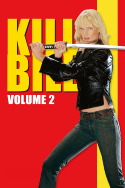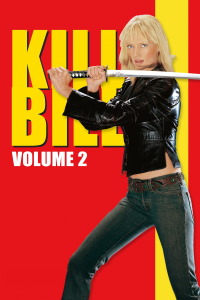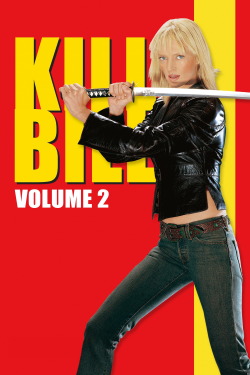
Review of Kill Bill: Vol. 2 (2004) by Brian_Mcinnis — 05 Jan 2011
If, in 'Kill Bill Vol. 1', Quentin Tarantino made one of the best.
Movies for people who love Japanese grindhouse, then in 'Vol. 2' he.
Made one of the best movies for people who love movies. Tarantino has.
Consistently been my favorite director and 'Kill Bill Vol. 2' is the.
Greatest of all his films to date. This isn't a sequel to 'Vol. 1', as.
He didn't decide to split 'Kill Bill' up until just after he finished.
Shooting, it's simply the second half. 'Vol. 1' is an excellent,.
Excellent film, but no where in the range of this one. I grin.
Ear-to-ear all the way through this movie.
'Vol. 2' is Quentin's most visually beautiful movie yet (and the.
Magnificent opening chapter, shot in gleaming black-and-white, is.
Resplendent to a degree that is profound, as is the great sequence at.
Pai Mei's ancient abode, shot in gloriously seventies-style.
Over-saturated greens and glaring whites), and it's where his flair for.
Spaghetti-Westerns comes out the most. As in all of Tarantino's films,.
The dialogue is an unadulterated joy.
This is nearly his least violent (and actually also almost his least.
Talkative) film yet, and I've read both the original script and David.
Carradine's 'The Kill Bill Diaries', about all he saw of the making of.
The movies, and it's clear that many of Quentin's best decisions had to.
Do with diminishing or removing the action. In place of the more.
Obvious strategy of showing us a detailed sequence of the Deadly Viper.
Assassination Squad gruesomely gunning down the people in the chapel,.
He decided no, pull back and let us just listen to a brief event from a.
Distance, observing it in a kind of silhouette. And in place of Bill.
Firing a warning shot at the Bride and holding her at gun-point while.
She walks towards a couch to seat herself, he decided Bill simply.
Regards her casually, his pistol just visible at his waist, of which.
They are both aware. In the earlier idea, all suspense would have been.
Spent with the warning shot. When Bill relates the tale of Pai Mei to.
The Bride, he decided it would be more effective to let us use our.
Imaginations while listening to Bill's ponderous speech by the.
Camp-fire in the dark than to play seventies Kung Fu footage of Pai Mei.
In action over the monologue.
The first time I saw the movie, the first big thing that struck me was.
Budd. His is a great and.
Tragic character, and Michael Madsen is a great actor, and his.
Performance begins in a singularly perfect scene with Carradine which.
Shows us his indifference to, and acceptance of, his approaching.
Probable demise. And for a long stretch the Bride is forgotten, and we.
Simply follow Budd into the lonely strip club he tends bar at, getting.
A taste of what his existence has become, of his disappointment and.
Withdrawal from life (the scene where he argues with his boss Larry and.
Finally relinquishes both his hat and his pride is worthy of applause).
Every time I watch the scene of the Bride's sneak-attack on him, I am.
More amazed by how exquisitely constructed the whole sequence is. A.
Long, meticulous build-up ending in unexpected truncation is a.
Trade-mark of Quentin's, in action as well as dialogue. What Budd does with the Bride is endlessly fascinating to me in its brilliant, primeval simplicity. This is the stuff of great myths. In the last chapter the tone of the film changes from the grandiose, Tarantinian adventure of the first four chapters and settles into an intimate dialogue between the story's two central characters (and one other, for a time), in which Quentin subtly and expertly simmers the tension and danger that exists between these two supremely deadly assassins. This section of the film is in keeping with an other trade-mark of Quentin's, that of inserting elements of simplest, uttermost reality into an over-the-top, epic story. With Quentin's help, David Carradine produced a magnificent performance in this film, as a man who is possibly even more laid-back than Carradine was himself (and who delivers three great monologues), but who can be deeply, genuinely menacing. 'Kill Bill Vol. 2' is the most joyful, the most exciting, the most glorious celebration of the cinema I've ever seen. It is Tarantino's deepest and most emotionally powerful film by far (and the often over-looked sequence of the Bride slowly preparing herself before leaving a bed-room to face Bill is one of the very best in the film). It has both the best and second- best uses of music I've heard in a movie (if not more). The climax of the Bride's raggedly magnificent confrontation with her wicked rival Elle evokes in me the emotion of sheer love. And the scene of the Bride's triumph over the designs of Budd has become my central image of the cinema. This is a movie that bursts with human life, and with its director's signature passion and love of the movies. I can't tell you how many times I've put the D.V.D. in to look at a specific part, and then ended up watching the whole damn thing again.
This review of Kill Bill: Vol. 2 (2004) was written by Brian_Mcinnis on 05 Jan 2011.
Kill Bill: Vol. 2 has generally received very positive reviews.
Was this review helpful?