Review of Kes (1970) by John A — 02 Sep 2008
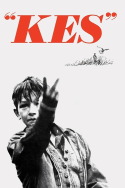
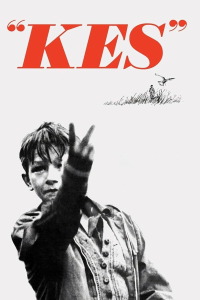
Ken Loach's down-to-earth drama 'Kes' is not a buddy film about a boy and his animal best friend. It is not a film about a boy and his pet, or one about the most unlikely of friends forming a deep bond and understanding. It could easily be described as all of these, but to do so would discredit the picture's true meanings, its ideas, and its humanity. David Bradley's performance is key to unearthing this mutually heart-warming and heart-breaking tale about a boy who simply finds a kestrel, tames it and comes to love her as a companion.
Billy Casper lives in the era of the film's making; West Yorkshire, Britain around the early sixties. Times are hard for many, and Billy has been in trouble with the police more than once for his theft and general mischief. He sees no future for himself at school, doesn't want to be stuck in an office job. But neither does he want to go down the pit, into the mines. It was the fate for so many back then, and there was little alternative choice.
'Kes' does indeed show scenes of Billy and the titular creature, but they work better because every other aspect of his life is shown in contrast, and in a realistic and common manner. Nothing is paid more attention than necessary, and Loach nods to how ordinary life can eventually take its toll on those seeking spirit, and adventure.
We meet Billy's older brother and mother at home. We meet his school peers, and learn the boy is something of a recluse and a loner. A brilliant football match scene is a crisp snapshot into the highlight of many of these boys' lives. The headmaster too offers Billy no insight of fair judgement, and only one teacher, Mr Farthing takes a genuine interest after a captivating lesson sequence. Billy is forced to stand and recite a true story, about himself, and so in one of the most raw and dialogue-driven scenes in cinema, he speaks the wonders of training his beloved Kes, the excitement, the fear and the suspense of looking after a creature that cannot be tamed, that it is, after all instinctive, wild.
The film is largely a sociological study, an observation of the dreary, bleak outlook of life in this time and place, and a boy's desperation to find hope beyond those he most profusely does not want to become. The kestrel is a symbol of that freedom, and hope. Those of Kes flying above Billy's head offer the only scenes that are truly awash with colour, and combined with a soothing, calm score become the most moving to witness. It is the resolution, however that hits hardest, that reflects the unfortunate limitations of the time and makes 'Kes' a truly great film. As I said, the sadness does not come from the gut, but the heart.
This review of Kes (1970) was written by John A on 02 Sep 2008.
Kes has generally received very positive reviews.
Was this review helpful?