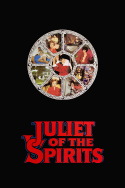
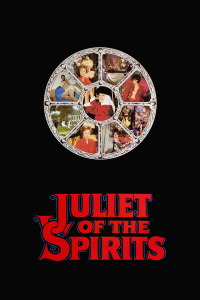
Review of Juliet of the Spirits (1965) by Elizabeth W — 04 Nov 2007
BEFORE READING, NOTE...
1. Federico Fellini is the director.
2. Giulietta Masina was his wife.
3. Sandra Milo was his mistress.
It's been 2 years since I voluntarily watched a technicolor-era Fellini. Of course, the last one I saw was Satyricon, and having loved La Strada, I Vitelloni, etc., it was quite a shock (and disappointment for me.) Juliet turned out a lot better than I suspected, but still overall just a big Fellini-esque jumble at this point in Fellini's history.
Even though this film was the feminine counter of 8 1/2, basically revealing the effects of Fellini's real-life adultery (and Italian adultery overall) from Giulietta Masina's POV, I still liked 8 1/2 better. At least in 8 1/2, Fellini did not use Giulietta in the role of Fellini-type Guido's wife together with Sandra Milo as the mistress/temptress at the same time. In Juliet, Giulietta's character actually follows the ways of a mistress, with real-life Fellini mistress Sandra Milo as guide. That right there is true marital love. I don't know how she did it... and this film must have taken a long time to film, too.
The wild sets, insane upper-class party scenes, and intense "psychodrama" situations were as brilliant as ever, but I think by this stage of development, all of Fellini's mise-en-scene was too familiar, the actors, plot, and even Nino Rota score lacked spark. Makeup and costumes were as amazing as ever, though. Technicolor did make things a little more titillating, but still nothing could not save the story from being an 8 1/2 rip-off.
On a personal note, this is when I think Fellini is no longer consistently conveying pertinent messages in his quickly-cut extravagant b-roll shots, as abstract as they are. In past films, every shot served a purpose, and anything on screen was incredibly meticulously put there, just so. Chandelier-swinging group shots lasting half a second had a purpose, perhaps because the budget required such things to be at more of a minimum than in Juliet. I love the abstract psychological emotions Fellini creates in his films, but having seen a handful of his films, I was disappointed when I realized pieces (most memorably the purple-and-red-clad man and the red-haired men in Giulietta's final marriage-shattering psycho-images) of the film were just there for the color and shock value, not the story. I cannot even imagine how much time is spent filming Fellini's films, and I think post-technicolor, less is said with more.
The film was a transition for Fellini, as half of the film mimicked his early Neorealist style of narrative, and half just focused on perfectly framed and choreographed images lacking defined messages, but which nearly make your brain explode with texture and color. These two styles clashed somewhat in Juliet. You don't mix chocolate and vanilla ice cream and expect a radical new flavor. Instead, you've created a longing for vanilla or chocolate ice cream alone.
This also shows up in how the protagonist's story is told. Giulietta, unlike Guido, has no monologue. It's harder to relate to her reflections, as it seems like everything is visually happening to her, not happening to the audience. The only scene I think effectively pulled off the visual imposing on a character as a way to further the traditional narrative plot is when she visits the private eyes and sees their results. Otherwise, with so much attention to actual events happening in the life of the husband and such little concrete storyline base in the form of Giulietta's feelings toward love, it's hard to care about whether or not she is happy in love in the end.
This review of Juliet of the Spirits (1965) was written by Elizabeth W on 04 Nov 2007.
Juliet of the Spirits has generally received very positive reviews.
Was this review helpful?